













Why It Pays to Be a Bit of a Psychopath

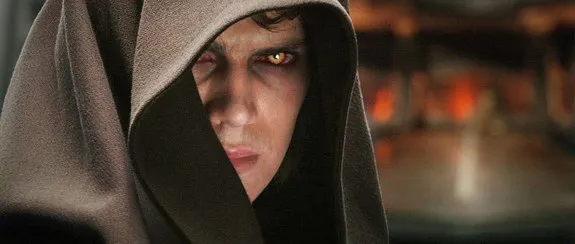
A small fraction of people are aggressive, manipulative and lack empathy or remorse — aka psychopaths. Given the social stigma psychopaths face, it's a mystery why such traits persist in society.
"For a long time, people have been aware that there are some people who don't play by the rules and are not cooperative," study co-author Matthew Gervais, an anthropologist at UCLA, told LiveScience. "There's been debate about whether those people benefit or incur costs."
In a new study, student volunteers who scored higher on a test of psychopathy acted more ruthlessly toward partners in a behavioral economics game when they felt disrespected by those partners or were unlikely to see them again, researchers report in the journal Proceedings of the Royal Society B. The findings suggest how psychopathic traits can exist in the population and be advantageous.
Psychopathy is actually more of a continuum than one extreme disorder, evidence suggests. While fully blown psychopaths will break social norms unconditionally, people with mild psychopathic tendencies appear to betray people strategically. [The 10 Biggest Mysteries of the Mind]
The study involved normal undergraduate students around age 19. The students were divided into small groups and told to converse on a topic of their choice for 10 minutes. Then, they were separated and given a questionnaire to measure their psychopathic tendencies. The questionnaire asked them to rate their agreement with statements, such as"what matters for me is the bottom line," or "I am often angry in social situations." There are two kinds of psychopathy, but this study was looking at the classic "conniving and cold" psychopaths.
Next, the researchers had the students play a "prisoner's dilemma" game, in which each person was given a sum of money that they could keep for themselves or transfer to a partner, for whom it would be doubled. For example, both people would start with $3; they could either keep $3 or give $6 to their partner. If the game has several iterations, it is in both people's best interest to cooperate and give the money away, because both will receive $6 instead of $3. But if it's just a one-shot game, it's in a person's best interest to keep the $3 for himself or herself, as there can be no consequence of not cooperating. (This experiment involved a one-shot game, though participants weren't told that fact.)
The students who scored higher on the questionnaire (meaning they were more psychopathic) were more likely to betray their partner and keep the money for themselves if that partner interrupted them more frequently (a sign of disrespect). The more psychopathic students were also more likely to betray a partner with whom they appeared to have less in common, and were therefore less likely to see again. In other words, those with more psychopathic tendencies only cooperated if there was something in it for them.
Get the world’s most fascinating discoveries delivered straight to your inbox.
"This study adds to the research showing that certain personality traits can predict the tendency to exploit other people," wrote Michael Ashton of Brock University and Kibeom Lee of the University of Calgary, in Canada, in an email to LiveScience. "Traits such as deceitfulness and conceitedness — as opposed to honesty and humility — involve a willingness to take advantage of others when the opportunity arises."
The findings show that people who have psychopathic traits are flexible in their ability to cooperate with others. "It does not explain psychopathy in a definitive way," Gervais said, "But it could be one explanation for the persistence of psychopathic traits."
Email Tanya Lewis or follow her @tanyalewis314. Follow LiveScience on Twitter @livescience. We're also on Facebook & Google+. Original article on LiveScience.com.
