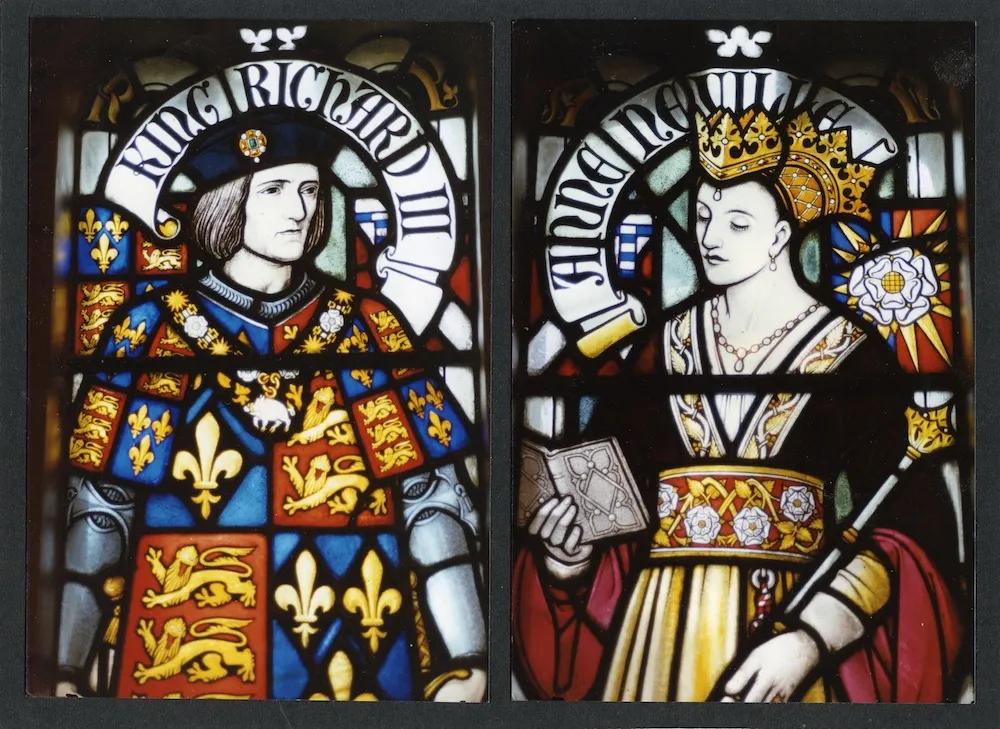
Archaeologists may have uncovered the skeleton of the lost English king Richard III. But if they have, what should be done with the remains?
That question is causing contention among Richard III enthusiasts, according to a new report in the Wall Street Journal. The University of Leicester, which is overseeing the excavation and analysis of the remains, has jurisdiction over the remains, but various societies dedicated to the king have their own opinions.
Two groups, the U.S.-based Richard III Foundation and the Society of Friends of Richard III based in York, England, argue that the remains should be reburied in York, because Richard III was fond of that city, the Journal reported. The Richard III Society, which has been involved with the archaeological dig in Leicester that uncovered the remains, is officially neutral — a stance which itself has triggered anger.
"The lack of respect that's been shown to his remains has grated our membership," Joe Ann Ricca, founder and president of the Richard III Foundation, told the Wall Street Journal.
Richard III's History
Richard III ruled from 1483 to 1485. He died in battle at Bosworth Field in the War of the Roses, and English civil war between the House of Lancaster and the House of York. After his death, Richard III's body was brought to Leicester and buried at Greyfriars Church. A century later, Shakespeare wrote "Richard III," a play fictionalizing the dead king's life.
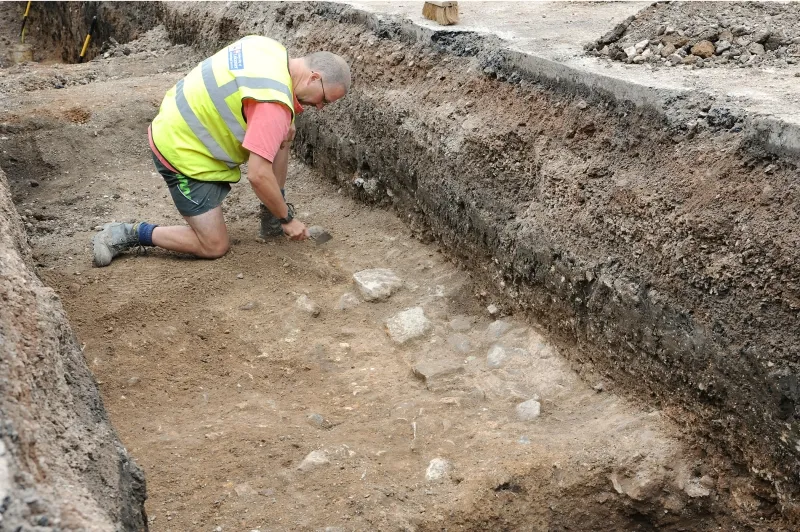
The location of both the Greyfriars church and Richard III's grave were eventually lost to history. In August 2012, however, University of Leicester archaeologists began excavating a city council parking lot in Leicester, under which the remains of the Greyfriars church were thought to be. [See Images of the Richard III Discoveries]
Sign up for the Live Science daily newsletter now
Get the world’s most fascinating discoveries delivered straight to your inbox.
University of Leicester archeologists are digging in the Leicester City Council parking lot in search of the grave of King Richard III.
(Image credit: University of Leicester)
Soon, the archaeologists unearthed floor tiles, window frames and other remnants of the medieval church. In less than a month, the team found a battle-bruised skeleton with signs of trauma to the skull and an arrowhead lodged in the spine, consistent with Richard III's cause of death.
The skeleton also had scoliosis, or an abnormally curved spine, consistent with contemporary accounts of Richard III's appearance.
Controversial remains
The team has not confirmed the remains to be Richard III's; the University of Leicester has said it will hold a press conference in the first week of February to announce results of the laboratory analysis of the bones.
"If the identity of the remains is confirmed, Leicester Cathedral will continue to work with the Royal Household, and with the Richard III Society, to ensure that his remains are treated with dignity and respect and are reburied with the appropriate rites and ceremonies of the church," the Very Reverend Vivienne Faull, the Dean of Leicester, said in a statement.
Petitions have sprung up online arguing that the reburial should take place at Westminster Abbey or Windsor Castle. But the most vocal critics say that Richard III would have wanted to be buried in York, where he was reportedly building a chapel at the time of his death.
"Think about this being a member of your family," Charles Brunner, a Kansas bank teller and Richard III enthusiast, told the Wall Street Journal. "Where would you want them to go? Where they wanted to go or the town they were taken to after they were killed, where they were stripped bare and put on public display?"
Stephanie Pappas is a contributing writer for Live Science, covering topics ranging from geoscience to archaeology to the human brain and behavior. She was previously a senior writer for Live Science but is now a freelancer based in Denver, Colorado, and regularly contributes to Scientific American and The Monitor, the monthly magazine of the American Psychological Association. Stephanie received a bachelor's degree in psychology from the University of South Carolina and a graduate certificate in science communication from the University of California, Santa Cruz.