













Flesh-Eating Maggots Attack Aussie Couple

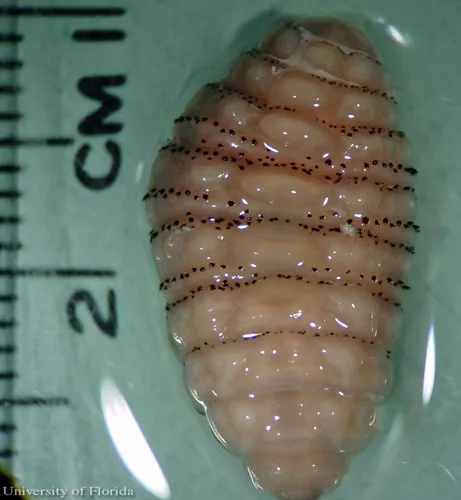
Every traveler's nightmare came true for Bryan Williams and Ally Vaag, two Australians vacationing in South America, when they made a gruesome discovery: Flesh-eating maggots were growing under their skin.
The couple had been touring the Amazon Basin when they were bit by mosquitoes, reports the New Zealand Herald. But by the time they had traveled to Bolivia, their bites had grown into oozing pustules that required medical attention to remove the small maggots living inside the wounds.
The maggots were the larvae of the human botfly (Dermatobia hominis), a large fly that resembles a bumblebee, according to the University of Florida Institute of Food and Agricultural Sciences. Despite the horror-story sound of the infection, it's relatively benign.
"There's a great mythology about the botfly, but really, you just pull them out and forget about it," Dr. Marc Shaw of New Zealand's Worldwise Travelers Health and Vaccination Center told the Herald. "They're quite robust little blighters, but they come out relatively easily."
The life cycle of the botfly, a native of Central and South America, is rather unusual. The female botfly captures a blood-sucking insect — usually a mosquito or tick — and deposits her eggs on the insect before releasing it.
When the mosquito or tick bites a human or another warm-blooded mammal, the botfly eggs sense the change in temperature and hatch into tiny larvae, entering the host's skin at the bite wound. Though the larvae feed on pus inside the skin, they still need to breathe, which they do through tiny air holes at the skin's surface.
After about eight weeks, the grown larvae will drop out of the wound into the soil, where they hatch into winged botflies, according to the University of Florida Institute of Food and Agricultural Sciences.
Get the world’s most fascinating discoveries delivered straight to your inbox.
Botflies aren't known to spread any infections, and they're relatively easy to get rid of: Simply cover the wound with petroleum jelly to suffocate the larvae, then remove them with a pair of tweezers.
Shaw said the best ways to prevent a botfly infection is to avoid mosquito bites: Wearing long pants and sleeves, and using insect repellents, will usually keep botflies at bay.
Follow LiveScience on Twitter @livescience. We're also on Facebook& Google+.
