














How 'Smashing' & 'Spearing' Shrimp Speedily Attack Prey

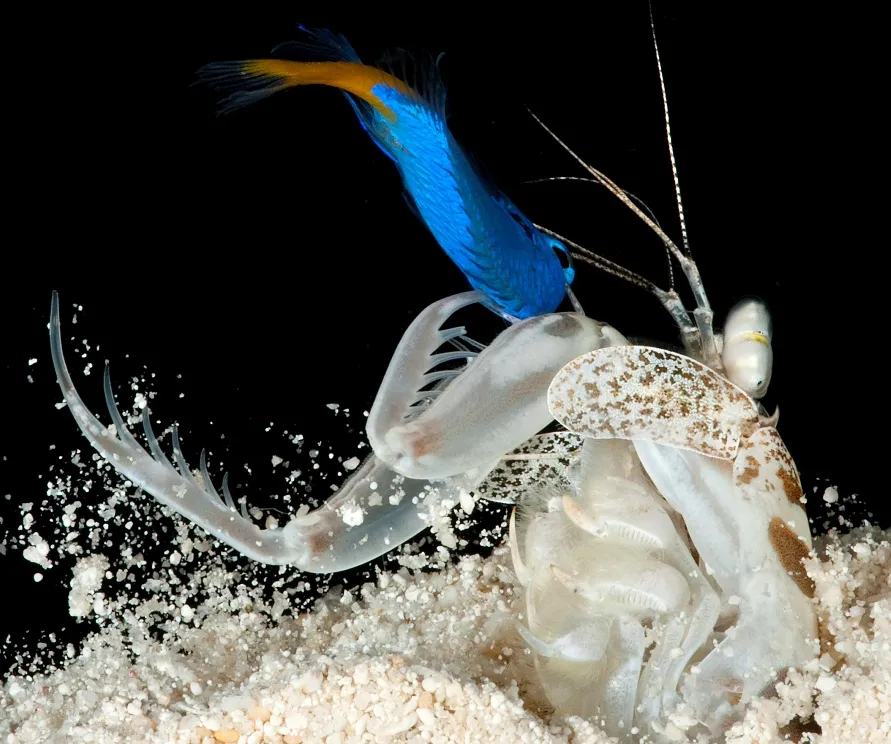
Spearing mantis shrimp hide in their burrows and wait for an unsuspecting creature to come along. Then, in the blink of an eye, they spear it with their long claws, like an underwater archer. How do they spear their prey so quickly?
Maya deVries, a researcher at the University of California, Berkeley, compared the attack of the spearing shrimp with its relative, the "smasher" shrimp. Both animals are able to unleash quick attacks with a strange spring and latch system that stores up energy in their muscles and releases it in an instant. It's like a bow and arrow, she said.
Unexpectedly, she found that smasher mantis shrimp can move much more quickly than the spearing variety, which is the opposite of what was expected. The smashers, she found, need quick speeds to produce enough force to crack the shells of their prey, such as crabs and other shellfish. The spearing shrimp, on the other hand, only needs to move slightly faster than their prey, she said.
Spearing shrimp can move their claws up to 8 feet (2.5 meters) per second, while their smashing brethren can reach speeds of 23 feet (7 m) per second, deVries said. The results were published in the Journal of Experimental Biology today (Nov. 22).
Peacock mantis shrimp, a relative of the smasher shrimp examined in the study, are even more impressive, moving their claws at speeds of 75 feet (23 m) per second and delivering blows with 200 pounds (91 kilograms) of force behind them despite being only 4 inches (10 centimeters) long.
Reach Douglas Main at [email protected]. Follow him on Twitter @Douglas_Main. Follow OurAmazingPlanet on Twitter @OAPlanet. We're also on Facebook and Google+.
Get the world’s most fascinating discoveries delivered straight to your inbox.
