













Humans can smell fear and disgust, and the emotions are contagious, according to a new study.
The findings, published Nov. 5 in the journal Psychological Science, suggest that humans communicate via smell just like other animals.
"These findings are contrary to the commonly accepted assumption that human communication runs exclusively via language or visual channels," write Gün Semin and colleagues from Utrecht University in the Netherlands.
Most animals communicate using smell, but because humans lack the same odor-sensing organs, scientists thought we had long ago lost our ability to smell fear or other emotions.
To find out, the team collected sweat from under the armpits of 10 men while they watched either frightening scenes from the horror movie "The Shining" or repulsive clips of MTV's "Jackass."
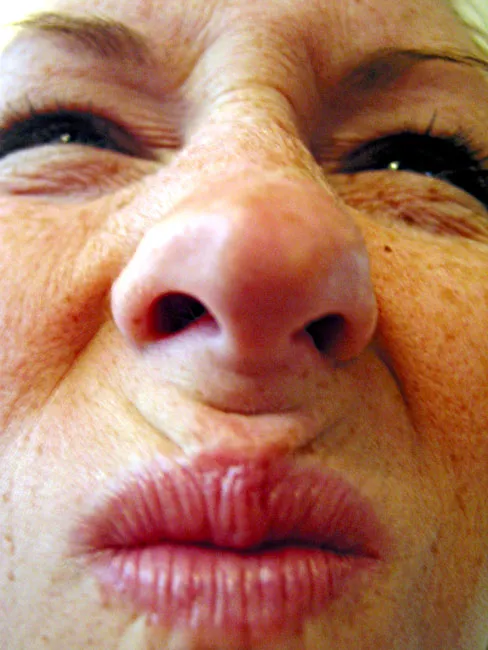
Next, the researchers asked 36 women to take a visual test while they unknowingly inhaled the scent of men's sweat. When women sniffed "fear sweat," they opened their eyes wide in a scared expression, while those smelling sweat from disgusted men scrunched their faces into a repulsed grimace. (The team chose men as the sweat donors and women as the receivers because past research suggests women are more sensitive to men's scent than vice versa.)
The findings suggest that humans can communicate at least some emotions by smell, which could prove useful in crowded places, the authors suggest.
Get the world’s most fascinating discoveries delivered straight to your inbox.
"Our research suggests that emotional chemo-signals can be potential contributors to emotional contagion in situations involving dense crowds," the authors write in the study.
Follow LiveScience on Twitter @livescience. We're also on Facebook & Google+.

Tia is the editor-in-chief (premium) and was formerly managing editor and senior writer for Live Science. Her work has appeared in Scientific American, Wired.com, Science News and other outlets. She holds a master's degree in bioengineering from the University of Washington, a graduate certificate in science writing from UC Santa Cruz and a bachelor's degree in mechanical engineering from the University of Texas at Austin. Tia was part of a team at the Milwaukee Journal Sentinel that published the Empty Cradles series on preterm births, which won multiple awards, including the 2012 Casey Medal for Meritorious Journalism.