













Man Tries to Save Rhinos with Toenail Clippings
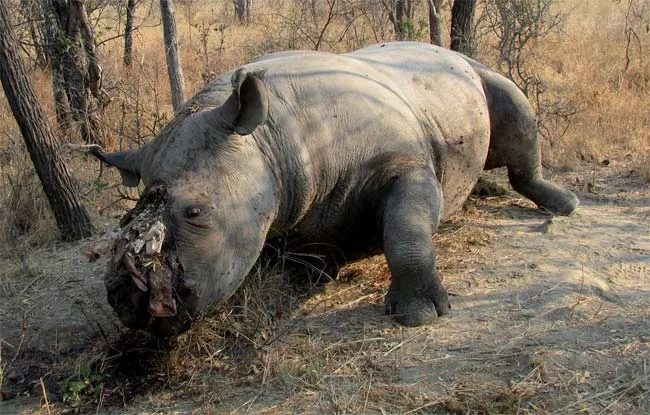
Feeling that he has exhausted his other options, a South African man who cares about rhinos has begun to mail his toenail clippings to the Chinese Embassy in Pretoria. Mark Wilby's seemingly bizarre decision is perhaps no stranger than the practice that he hopes to call attention to: the killing of rhinos for their horns, which are thought, without scientific basis, to have medicinal value in certain Asian countries.
Rhino horns are composed almost entirely of keratin, a protein also found in human hair, fingernails and toenails. Wilby's thinking goes that any reputed health benefits of rhino horns would be available for free to anyone with a nail-chewing habit, or anyone who happened to possess many parcels of toenails.
But the easy availability of keratin is either unknown or unimportant to rhino horn buyers, who have driven the price of the illegal commodity to rival that of gold, Reuters reported. The demand has led to the extinction of Vietnam's rhinos and a massive spike in rhino poaching in South Africa over the past few years.
Wilby, a film production designer, released a video on YouTube that shows him and a group of like-minded South Africans clipping their toenails and depositing them in envelopes addressed to the Chinese embassy. He hopes to inspire others to do the same, noting that contributions of hair and fingernails would also suffice.
"I'm sending this to the Chinese embassy in South Africa not because I'm blaming the Chinese government or the Chinese people. I just don't know who else to appeal to," Wilby says in the video, posted on Oct. 19. "The Chinese government has the power to help us find out and understand the market, wherever it is."
A report earlier this year from TRAFFIC, a nongovernmental global network that monitors wildlife trade, concluded that, while Chinese trade in horns is a problem, the world's leading consumer of rhino horns is Vietnam. [Black Market Horns: Images from a Rhino Bust]
In that country, some beliefs about rhino horn powder — that it can lower a fever, for example — are rooted in traditional Chinese medicine. But others, such as the belief that the substance can cure cancer, or act as an aphrodisiac, are modern additions to the horn's reputation that have gained traction in Vietnam. (According to the TRAFFIC report, there is no evidence that rhino horn was classified or used as an aphrodisiac in the Far East before Western media began to mistakenly report that it was.)
Get the world’s most fascinating discoveries delivered straight to your inbox.
The practice of mixing rhino horn powder with alcohol, both to convey status and to supposedly prevent hangovers, is also booming in Vietnam's wealthy circles, according to the TRAFFIC report.
As of Oct. 17, 455 rhinos had been killed in South Africa this year, up from 2011's total of 448, according to the country's department of environmental affairs. In 2007, 13 rhinos were poached.
South Africa is home to an estimated 20,000 rhinos, about 90 percent of Africa's total rhino population.
Follow Life's Little Mysteries on Twitter @llmysteries. We're also on Facebook & Google+.