













Fossil of Oldest Rabbit Relative Found
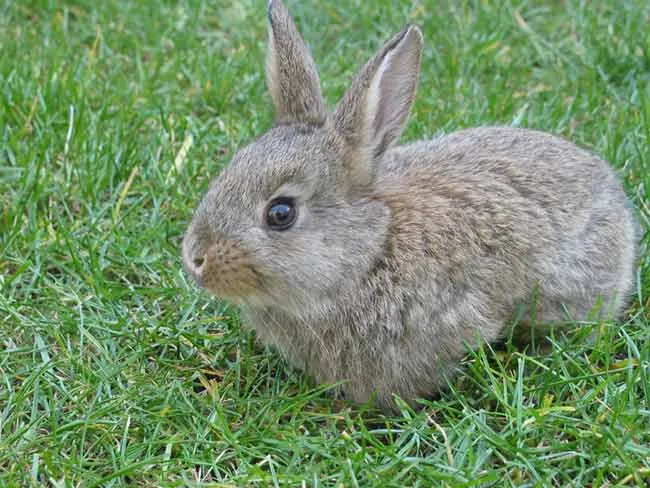
Just in time for Easter, the oldest rabbit relation is bounding onto the scientific scene.
Tiny foot bones from a 53 million-year-old rabbit ancestor represent the oldest known record of hippity-hoppity mammals and their closest evolutionary relations, according to a new study.
The ankle and heel bones were discovered in a coal mine in Gujarat, in west-central India, and recently found by a team of paleontologists to belong to the Lagomorpha, a classification of mammals that includes modern-day rabbits, hares and pikas (pikas are hamster-sized rabbit cousins).
"This is 35 million years older than anything that's ever been called a lagomorph on India, totally unexpected," said lead researcher Kenneth Rose, a professor in the Center for Functional Anatomy and Evolution at the Johns Hopkins University School of Medicine in Baltimore. "Undoubtedly it's a new species; undoubtedly it's a new genus; it could even be a new family."
The pipsqueak would have been much smaller than the classic Easter bunny, about the size of a hamster, weighing well under a half pound (less than 100 grams). The bones were found embedded in material deposited in land once covered with swamps and bays near a shore, suggesting the animal may have lived in some sort of near-shore environment.
The new lagomorph, detailed online recently in the journal Proceedings of the Royal Society B, would also be the earliest known mammal identified in India from the Cenozoic era, aka the Age of Mammals, which occurred after the extinction event that wiped out non-avian dinosaurs, Rose said.
Rose's analysis of the Indian foot bones involved comparing them with eight living species of rabbits and hares, as well as two species of pika, which live today in the Rocky Mountains and other mountainous regions.
Get the world’s most fascinating discoveries delivered straight to your inbox.
Rabbits and hares belong to one of two lagomorph families, called Leporidae, while pikas are members of the other family called Ochotonidae. Past evidence suggested the two lagomorph families had diverged some 35 million years ago.
Rose's team found the bones, which are four to five times smaller than those of modern-day jackrabbits, resemble pikas in some of their primitive features. But unlike pikas, which don't hop, the bones showed some advanced features that would've made this rabbit-like animal quite a hopper. In fact, the bones showed similar, yet more advanced, features to previously unreported Chinese rabbit fossils that date to the Middle Eocene epoch, about 48 million years ago.
"These foot bones look more like cottontail [rabbit] foot bones," Rose told LiveScience. "They're from some more specialized, little running, jumping lagomorph."
Rose added, "Most likely, the lagomorphs originated somewhere in Central Asia and dispersed, and a small rabbit-like form got down to India quite early, around the time of the collision of India with Asia."
- Top 10 Amazing Animal Abilities
- Image Gallery: Endangered Wildlife
- Why We Walk and Run vs. Hopping and Skipping
Jeanna Bryner is managing editor of Scientific American. Previously she was editor in chief of Live Science and, prior to that, an editor at Scholastic's Science World magazine. Bryner has an English degree from Salisbury University, a master's degree in biogeochemistry and environmental sciences from the University of Maryland and a graduate science journalism degree from New York University. She has worked as a biologist in Florida, where she monitored wetlands and did field surveys for endangered species, including the gorgeous Florida Scrub Jay. She also received an ocean sciences journalism fellowship from the Woods Hole Oceanographic Institution. She is a firm believer that science is for everyone and that just about everything can be viewed through the lens of science.