













Boy Discovers Frozen Mammoth in Russia

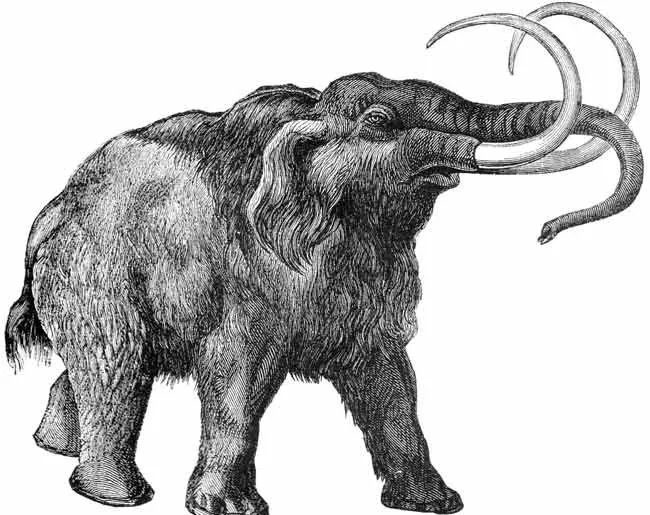
An 11-year-old boy in Russia's far north found the frozen carcass of a woolly mammoth with soft tissue, skin and hair intact.
Yevgeny Salinder stumbled upon the extraordinarily well-preserved remains in the Taymyr tundra, a few miles away from the Sopkarga polar weather station, according to The Moscow News.
After Yevgeny's parents reported their son's discovery, researchers spent a week carefully prying the 1,100-pound (500-kilogram) carcass from the frozen ground with axes, picks and steam. The mammoth reportedly was taken via helicopter to the town of Dudinka, where it was put in an ice chamber and awaits further study by paleontologists from Moscow and St. Petersburg.
Scientists have already determined that the specimen is a male that died around age 15 or 16 about 30,000 years ago. Besides skin and hair, the remains include a tusk, bones and even reproductive organs.
The mammoth has been unofficially named after the boy.
"Despite the fact that it is not common in scientific circles to name the adult remains of ancient animals, this mammoth was called Zhenya," which is a nickname for Yevgeny, said deputy head of the Zoological Institute in the Russian Academy of Sciences, Alexei Tikhonov, according to The Moscow News. "Officially the animal will be known as the Sopkarginsky mammoth."
Follow LiveScience on Twitter @livescience. We're also on Facebook & Google+.
Get the world’s most fascinating discoveries delivered straight to your inbox.
