














Less Forest, Less Rain: Deforestation Reduces Tropical Rainfall

Deforestation can significantly reduce rainfall in tropical areas and beyond, according to a study published today (Sept. 7) in the journal Nature.
Over a majority of the Earth's tropics, air passing over forested land produces twice as much rain as air passing over areas of sparse vegetation, the study found. Loss of forest cover can decrease levels of rainfall thousands of miles away.
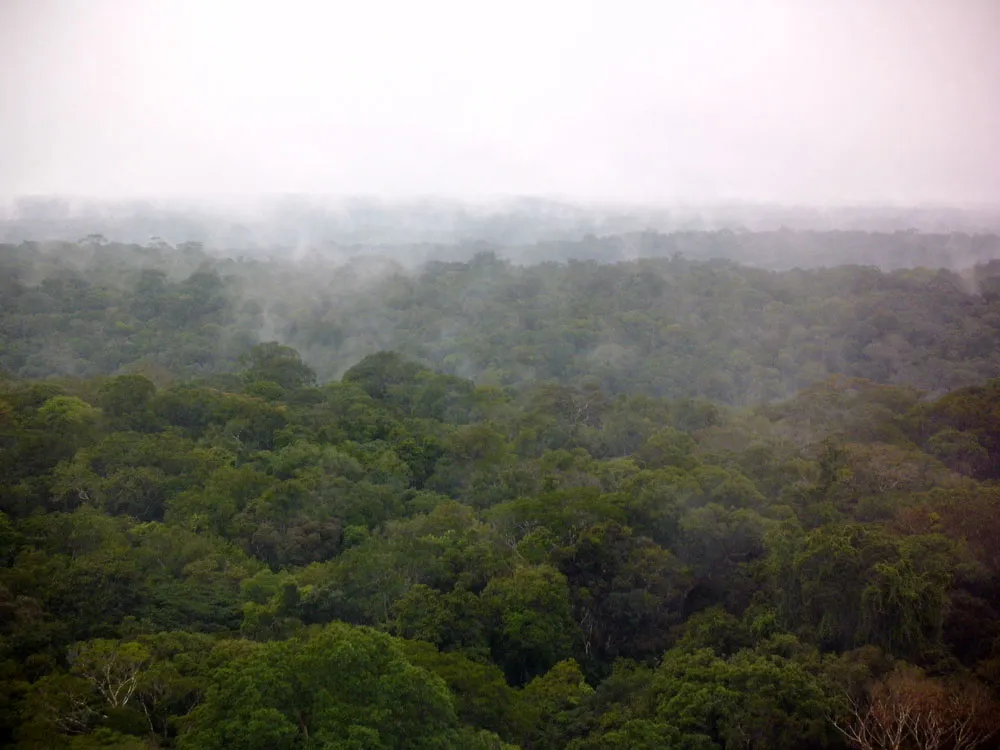
Deforestation has already reduced rainfall in heavily populated areas adjacent to the Amazon and Congo rainforests, according to a statement from England's University of Leeds, whose researchers were part of the study.
If deforestation continues at current rates, rainfall across the Amazon basin could be reduced by more than 20 percent in the next 40 years, the study found.
"Our study implies that deforestation of the Amazon and Congo forests could have catastrophic consequences for the people living thousands of kilometers away in surrounding countries," study author and University of Leeds researcher Dominick Spracklen said in a statement.
For hundreds of years, researchers have debated whether vegetation increases rainfall. It's well-known that plants put moisture back into the air via evapotranspiration, the process by which leaves return water vapor to the atmosphere. But how much rainforestsproduce has been unclear. This is one of the first studies to quantify the rainmaking ability of large forests, according to the release.
The team used newly available NASA satellite observations of rainfall and vegetation, and a computer model that predicts atmospheric wind flow patterns, to explore the impact of the Earth's tropical forests.
Get the world’s most fascinating discoveries delivered straight to your inbox.
Follow OurAmazingPlanet on Twitter @OAPlanet. We're also on Facebook and Google+.
