















Video - Squid Skin Stimulated With an iPod

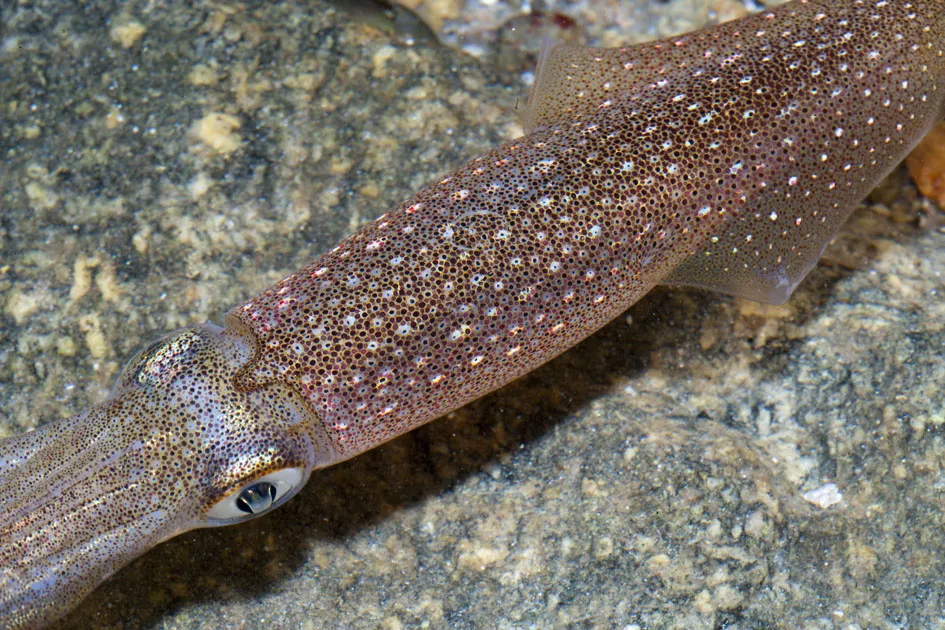
Cephalopods are masters of camouflage, rapidly changing color to blend in with their environment in response to neural impulses. And now researchers have demonstrated how this process works — with a dead squid hooked up to an iPod.
Backyard Brains, a company dedicated to at-home neuroscience kits for students, attached an iPod nano to the fin nerve of a longfin inshore squid (loligo pealei) with an electrode. They played "Insane in the Brain" by Cypress Hill and watched the squid's pigmented cells, called chromatophores, change color and pulse in sync with the beat, with the bass frequencies acting like neural impulses.
The team was inspired by experiments at the Marine Biological Laboratory in Woods Hole, Mass., where scientists recently discovered that squid skin is equipped with a nerve network allowing these invertebrates to alter their iridescence. Electrical stimulation of the nerves changes the color and reflectance of tiny plate-like structures called iridophores, which work together with the chromatophores to create shimmering patterns of color.
Backyard Brains used the same technique with their SpikerBox to show how electrical signals make a cockroach's leg move.
Get the world’s most fascinating discoveries delivered straight to your inbox.
