













Scientists to Americans: Take a Hike!

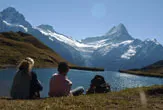
"Take a hike!" isn’t just a rebuff. Now it's also a plea from environmental scientists. Researchers have found that people are enjoying the outdoors less than they used to, which may lead to decreased interest in protecting the environment.
Over the past 20 years, trips to U.S. parks have declined about 20 percent. In 2006, about 273,000 Americans visited a state or national park, down from about 287,000 people in 1987, according to a new study by conservation scientists Oliver Pergams of the University of Illinois at Chicago and Patricia Zaradic, a fellow at the Environmental Leadership Program. This averages out to roughly 0.9 visits per person a year now, compared to 1.2 visits 20 years ago.
And it's not just park visits that are down, but almost every form of outdoor recreation, including camping, hunting and fishing.
The researchers blame this outdoor decline on a phenomenon they've termed videophilia — a pervasive preference for experiencing the world through electronic media rather than actually leaving the house.
"There's this fascination for virtual nature as opposed to the real thing," Zaradic told LiveScience. "We can't say for sure that this is the smoking gun cause [of the decline], but I think it's very, very closely related."
The only type of outdoor enjoyment that is on the rise is hiking. The average American now goes once every 10 years. If this sounds like a pitiful number, it's still an improvement over the rate in 1987: Back then, Americans hiked only once every 12.5 years.
The researchers speculate that the boost in hiking may result from the drop in camping — perhaps people who used to commit to an overnight trip have downgraded to day hikes.
Get the world’s most fascinating discoveries delivered straight to your inbox.
All of these trends have the scientists worried.
"It makes a huge difference if people are going less and less," Zaradic said. "There's a whole set of research that shows people care more about conservation issues when they are exposed to nature."
Zaradic and Pergams fear that the less people feel dirt under their feet and smell the fragrance of trees, for example, the less they'll want to recycle and donate money to Greenpeace or other environmental advocacy groups. The lack of interaction with nature could have serious consequences for future generations, who may not have the fond memories of childhoods spent outdoors that many older Americans have.
"Today's young people are being raised in an environment of less and less exposure," Zaradic said. "It has implications for the future — we're likely to see ripple effects."
The researchers don’t know what's behind this shift indoors but say that hunting down the causes of videophilia is an important next step in fighting the trend.
Zaradic said she might even consider running television ads in an awareness campaign. Though it may be ironic to use electronic media to convince people to turn off their TVs, she said, "if that's where the people are, I think it's a viable outreach tool."
- Video: Grand Teton National Park
- Image Gallery: Magical Mountains
- Quiz: What's Your Environmental Footprint?
