













How Mice Hook Up

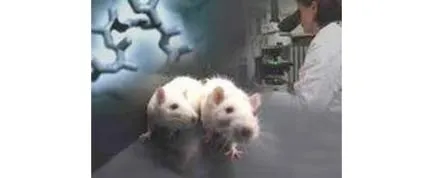
Mice all look pretty much alike to each other. So how do they hook up?
They can be such dogs, it turns out: They sniff each others' pee. It's not how scientists thought it worked. For years, experts figured a set of genes called the major histocompatibility complex (MHC) helped animals identify individuals by body scent. Each individual animal has a different MHC code, and it is known to influence body odor. Researchers assumed animals sensitive to scents would use these different odors to recognize each other. To test the theory, scientists observed how female mice identify potential mates. Females distinguish between dominant and weaker males by how fresh a male scent-mark is. A dominant male marks territory after driving the competition out, by leaving the freshest mark. But females in the new study, detailed in the journal Current Biology, could not discern one mouse from another by their MHCs. Instead, a special set of proteins in urine is the identifying factor. "These major urinary proteins (MUPs) act like a 'chemical barcode' of individual identity," said lead researcher Jane Hurst of the University of Liverpool. "Each individual has a slightly different set of proteins, allowing each animal to be easily recognized." The females look for "dominant males that are likely to be good sires for their offspring," Hurst said. Other animals may use urine for recognition also, Hurst and her colleagues speculate.
- Amazing Animal Abilities
- 10 Amazing Things You Didn't Know about Animals
- Life's Little Mysteries
Get the world’s most fascinating discoveries delivered straight to your inbox.
