













Asteroid Mining in Fiction, Past and Present
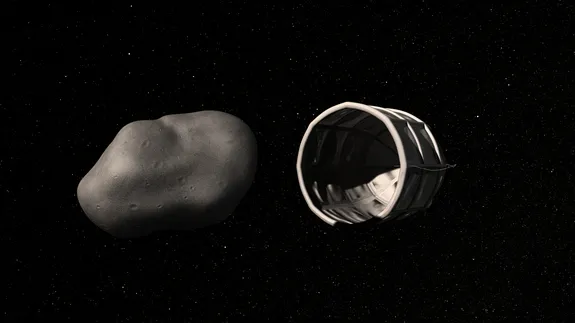
A new billionaire-backed venture announced today that it plans to use robots to mine asteroids for precious metals and in the process add trillions of dollars to the global economy. If the so-called Planetary Resources group, which includes director James Cameron and Google co-founder Larry Page, succeed, they will breathe life into an idea that is more than a century old and a staple of many science fiction books and movies.
One of the earliest works to explore this idea is the 1898 American space opera, the Thomas Edison-endorsed "Edison’s Conquest of Mars." Written by astronomer-fiction author Garrett P. Serviss, the book, which also stars Edison as the hero, follows a fleet of spaceships that run into huge-headed Martians mining asteroids for gold. The book was a watershed title for the sci-fi genre, introducing tropes like asteroid mining, as well as alien abductions, disintegrator laser beams and more. [Does Asteroid Mining Violate Space Law?]
As the genre became more popular, the notion of space travel and colonization grew into a dominant theme. And in many of these stories, tapping asteroids for valuable resources was a staple for any story’s intergalactic backdrop. Hugo-winning sci-fi writer Larry Niven used ore-rich asteroids to populate the universe in his famed collection of novels, "Known Space."
Isaac Asimov’s 1944 short story “Catch That Rabbit,” part of his "Robot" series, uses an asteroid mining station as the setting. (Drama ensues when Dave the robot malfunctions and ceases his mining duties.) Asimov’s peer, Robert Heinlein, also depicted asteroids as vessels for precious commodities.
In his 1952 novel "The Rolling Stones," Heinlein gave the asteroid belt the Gold Rush treatment. Galactic prospectors ventured from far and wide to find the space rocks, which brimmed with radioactive ores that promised fabulous wealth.
Stripping near-Earth objects has also been used as a plot device in TV and film, like in the 2004 "Battlestar Galactica" episode “The Hand of God.” The characters discover Cylons mining an asteroid that’s ripe with tylium, a fuel source.
In Yoshiyuki Tomino’s anime and novel franchise "Gundam," asteroid mining is mentioned often: For example, the 1985 anime "Mobile Suit Zeta Gundam"features Axis, an asteroid mining colony located in the asteroid belt, that becomes a stronghold for the Republic of Zeon.
Get the world’s most fascinating discoveries delivered straight to your inbox.
British sci-fi sitcom "Red Dwarf" saw the eponymous mining cargo ship transport ore (presumably extracted from asteroids), only for the journey to go awry.
This story was provided by InnovationNewsDaily, a sister site to LiveScience.