













Watered-Down Abortion Ultrasound Bill Passes Virginia Senate

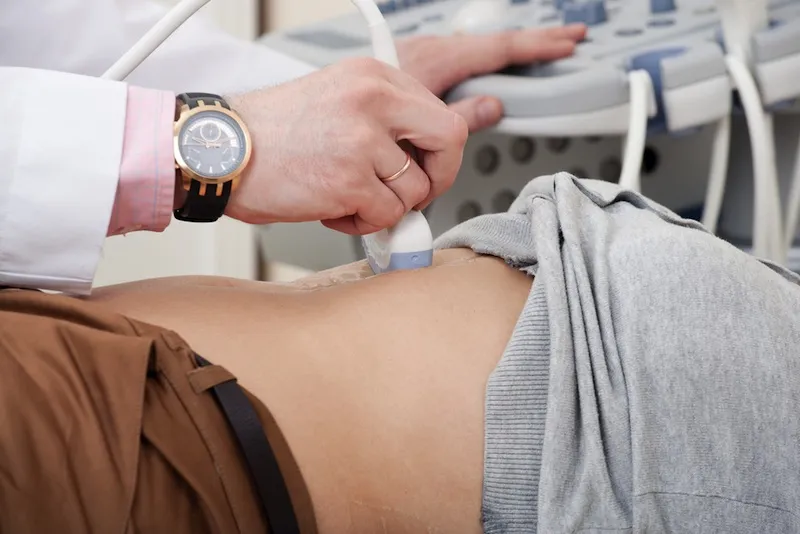
The Virginia state Senate approved a watered-down version of a bill that would require women to get an ultrasound before having an abortion.
Tuesday's vote came after a national outcry over a provision in the original bill that would have required that women interested in an abortion get a transvaginal ultrasound if an abdominal ultrasound couldn't present the clearest picture of an embryo or fetus, Reuters reported. At nine weeks gestation, a fetus is about 0.9 inches (2.3 cm) long, so abdominal "jelly on the belly" ultrasounds often can't pick up clear images or heartbeats. According to the non-profit Guttmacher Institute, 88 percent of abortions occur in the first 12 weeks of pregnancy, with 62 percent occurring before nine weeks.
The watered-down bill still requires women to get an abdominal ultrasound before an abortion, and doctors would be required to offer an additional transvaginal ultrasound if the first images were unclear. However, women will not have to receive the more invasive procedure. The bill includes an exemption for pregnancies resulting from rape or incest that has been reported to law enforcement.
The Virginia House will now consider the Senate changes, and then the proposed law will go to Virginia's Republican Governor Bob McDonnell for a signature. McDonnell had originally supported the bill, but backed off after opponents compared the transvaginal ultrasound requirement to state-sponsored rape. [Top 10 Historically Significant Political Protests]
Ultrasound requirements have passed in six states, with abortion-rights foes touting them as a way to discourage women from going through with abortions. But there is little scientific evidence that seeing images of a fetus or embryo changes minds. In one 2009 study, 72 percent of women given an option chose to view a sonogram image before an abortion. None changed their mind about the procedure.
The study isn't an exact replica of the situation in states such as Texas and North Carolina, where women are forced to receive an ultrasound and listen to a verbal description of the image. But abortion providers say ultrasounds don't change women's minds.
"I've never seen anybody who said they were coming in to an abortion, wanted to see the ultrasound, reacted to it and then changed their mind on the basis of that," Ellen Wiebe, an abortion provider and director of the Willow Women's Clinic in British Columbia, Canada, told LiveScience last year.
Get the world’s most fascinating discoveries delivered straight to your inbox.
You can follow LiveScience senior writer Stephanie Pappas on Twitter @sipappas. Follow LiveScience for the latest in science news and discoveries on Twitter @livescience and on Facebook.

Stephanie Pappas is a contributing writer for Live Science, covering topics ranging from geoscience to archaeology to the human brain and behavior. She was previously a senior writer for Live Science but is now a freelancer based in Denver, Colorado, and regularly contributes to Scientific American and The Monitor, the monthly magazine of the American Psychological Association. Stephanie received a bachelor's degree in psychology from the University of South Carolina and a graduate certificate in science communication from the University of California, Santa Cruz.