















Work Boredom May Cause Employees to Call in Sick

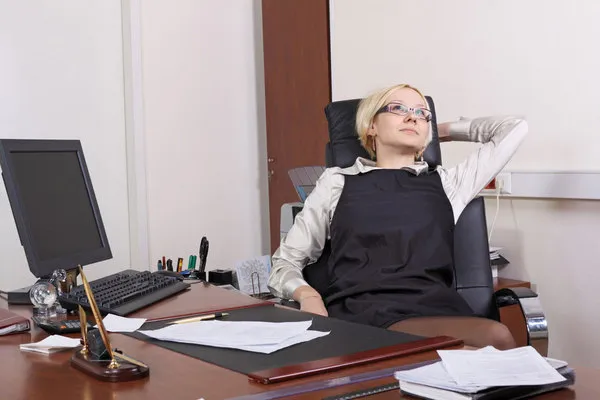
Though the stress of an especially hectic work day may make you wish you'd stayed in bed, a new study shows that it's actually a slow day at the office that makes an employee more likely to call in sick.
In the study, participants were 2.5 times more likely to call in sick on days they expected to have a light workload, compared with days when they had a normal workload, the researchers said.
And the risk for was even higher if workers' doldrums had started the day before they called in sick.
"Our results indicate that nonmedical factors may have trigger effects on short-term sick leave," the researchers wrote in the February issue of the Journal of Occupational and Environmental Medicine.
One reason for the findings may be that employees are less satisfied with their jobs when they're twiddling their thumbs, and so they're less motivated to show up to work when feeling ill. Another idea is that bosses might encourage their coughing and sneezing employees to stay home when the workload is light.
Exactly which factor is at play is impossible to tell from the new study. In addition, the findings may not be generalizable to people in all work fields — employees in the study who worked for a manufacturing plant were more likely to have slow days than those who worked in the health care field or office workers.
Larger studies are needed to determine the effect of workload on employee sick days in different occupations, the researchers said.
Get the world’s most fascinating discoveries delivered straight to your inbox.
The study involved 1,430 employees at six Swedish workplaces who were followed for three to 12 months. Of these, 546 took a day off over the study period. Employees were interviewed during their time off, and asked whether they had experienced a slow work day anytime during the two-week period prior to the sick day, and on the sick day itself.
The researchers noted having a light workload was not common among participants. Of those who took sick leave, 88 percent said they had not experienced a slow work day in the two weeks leading up to their sick day. This suggests that the effect of a light workload on taking sick leave, while real, may be quite small, the researchers said.
The study was conducted by researchers at the Karolinska Institute in Stockholm.
Pass it on: Employees may be more likely to take time off work when they have too little to do.
This story was provided MyHealthNewsDaily, a sister site to LiveScience. Follow MyHealthNewsDaily on Twitter @MyHealth_MHND. Find us on Facebook.
