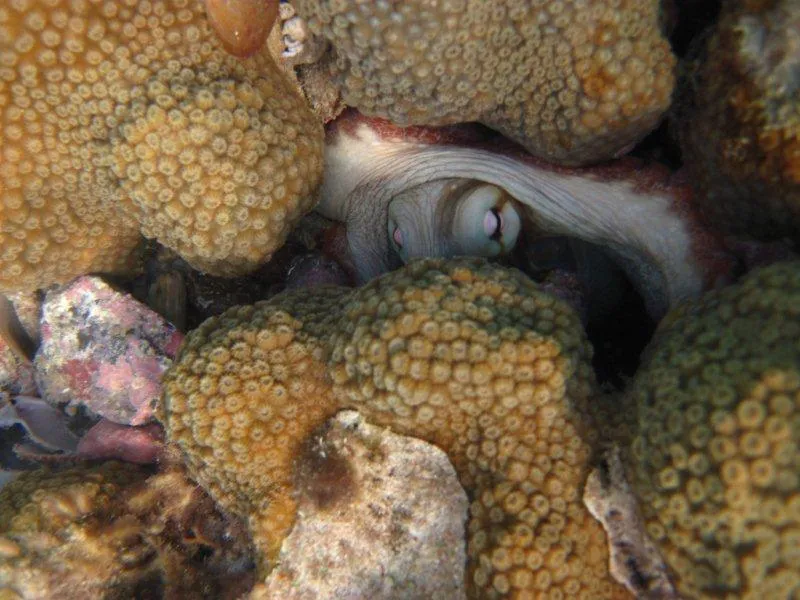
The chilly waters of the Arctic and Antarctic Oceans are enough to slow anyone down. But octopi that have relocated to these areas play tricks with their genetic material to keep moving.
Cold temperatures slow us down because all molecules move slower in colder temperatures, including those proteins that send "movement" messages along nerve cells. To compensate, one species of chilly-water octopus change, or "edit," intermediate protein-making molecules — called RNA — a short-term solution that allows greater flexibility than if they were to actually alter DNA, called genetic mutations.
While scientists have known that RNA editing exists and that it can change how certain channels in the body open and close (and in turn how long it takes to send messages along nerves), they hadn't seen it happen in response to an environmental cue, specifically temperature, study researcher
of the University of Puerto Rico, told LiveScience.
Chilly cephalopods
The researchers compared two species of octopus. Pareledone species were collected at the Antarctic research facility, McMurdo Station, where the waters average 35.2 degrees Fahrenheit (1.8 degrees Celsius). The other species, Octopus vulgaris, came from the waters off of Puerto Rico, which are usually about 86 degrees Fahrenheit (30 degrees Celsius).
They analyzed the genes that make up the electricity-conducting ion channels that regulate when a brain cell (or neuron) sends a message. The researchers found little difference in the signals between the two species; to compensate for the temperature-based slowdown, Antarctic and tropical octopi used their very similar genes in different ways.
Sign up for the Live Science daily newsletter now
Get the world’s most fascinating discoveries delivered straight to your inbox.
"What really surprised us, when we cloned [looked at the code of the] the genes, they were virtually identical between the Antarctic and the tropical octopus, after millions of years apart in very different temperatures," Rosenthal said. "It isn't the differences in the genes that drive adaptations in the cold. The organisms are editing the RNAs in way that adapts to the cold."
Editing RNA
Chilly waters make life slow for antarctic octopi.
(Image credit: Joshua Rosenthal)
So even though the genes were the same, the researchers found evidence that the RNAs of the cold-water octopus were changed before they were made into proteins. RNA is the intermediate form of DNA that actually produces proteins that tell the body how to function.
When expressed without editing, the cold water ion channels open about 14 times slower and close 60 times slower in cold water compared with warm waters. When turned on, this particular RNA editing changed the way these channels worked and allowed the octopus to compensate for the harsh physical conditions, keeping its nerve signals moving relatively quickly even in chilly waters.
"From the standpoint of the organism … it gives you good options because you can decide to change protein function now or you don't want to. You don't have to stick to exactly what your gene says," Rosenthal said. "To the more casual observer it would seem like this is a lot to go through for the organism, but this allows org to have a graded response, not just one response or another."
This editing is one example of how differences between species go much further than their genetic code alone. Even similar-looking genes can end up making big differences in different species. RNA editing is less prevalent in vertebrates and mammals; there are about 30 to 40 known editing sites in humans.
The study was published today (Jan. 5) in the journal Science.
You can follow LiveScience staff writer Jennifer Welsh on Twitter @microbelover. Follow LiveScience for the latest in science news and discoveries on Twitter @livescienceand on Facebook.
Jennifer Welsh is a Connecticut-based science writer and editor and a regular contributor to Live Science. She also has several years of bench work in cancer research and anti-viral drug discovery under her belt. She has previously written for Science News, VerywellHealth, The Scientist, Discover Magazine, WIRED Science, and Business Insider.