













Women See 'Good Mate' Traits in Effeminate Men

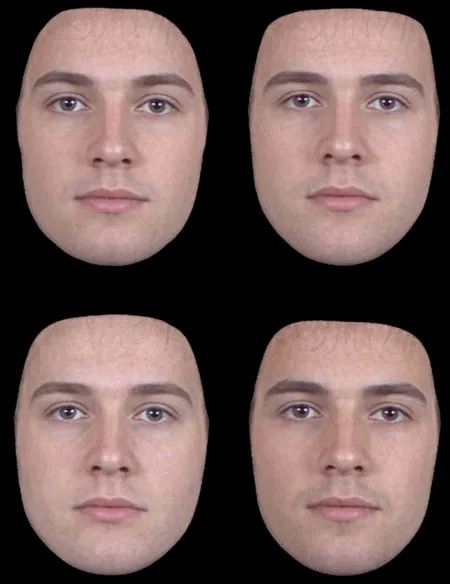
Women see the traits that make a good husband in male faces that tend toward female, a new study finds.
Researchers asked 400 British men and women to judge digitally altered pictures of male faces shown without any hair, ears, neck, shoulder or clothing visible and made to look more masculine or feminine.
Two male faces, one more masculine and one more feminine, were presented side by side and the participants were asked to select the face they thought showed more of particular traits including dominance, ambition, wealth, faithfulness, commitment, parenting ability and warmth.
Faces with more masculine features (such as a square jaw, larger nose and smaller eyes), were judged to me more dominant, less faithful, worse parents and as having less warm personalities than those with more feminine features (such as fuller lips, wide eyes and thinner, more curved eyebrows).
"This research shows a high amount of agreement between women about what they see, personality wise, when asked to 'judge a book by its cover'," said lead author Lynda Boothroyd of Durham University in the United Kingdom.
"They may well use that impression of someone to decide whether or not to engage with that person," Boothroyd added. "That decision-making process all depends on what a woman is looking for in a relationship at that time of her life."
Another recent study found that women who were in the fertile stage of their menstrual cycle preferred more masculine-looking males for short-term relationships, but more feminine-looking males while they were less fertile.
Get the world’s most fascinating discoveries delivered straight to your inbox.
Other studies have also found a link between a male's perceived manliness and his desirability to women as a long-term partner.
The apparent healthiness of the faces in the new study, published in the current issue of the journal Personality and Individual Differences, also played a factor in desirability. Those faces that had better complexions were seen as more desirable in terms of all the personality traits.
"Our results contradict claims that machismo denotes fitness and disease immunity," said David Perrett of the University of St Andrews in Scotland. "Masculinity may buy you dominance but not necessarily tip-top physical condition. Instead, women see a healthy guy as the source of wealth, and fit for family life."
- 10 Things You Didn't Know About You
- The Sex Quiz: Myths, Taboos, and Bizarre Facts
- A Brief History of Human Sex

Andrea Thompson is an associate editor at Scientific American, where she covers sustainability, energy and the environment. Prior to that, she was a senior writer covering climate science at Climate Central and a reporter and editor at Live Science, where she primarily covered Earth science and the environment. She holds a graduate degree in science health and environmental reporting from New York University, as well as a bachelor of science and and masters of science in atmospheric chemistry from the Georgia Institute of Technology.