Welcome Autumn: Why Fall Starts Friday
Get the world’s most fascinating discoveries delivered straight to your inbox.
You are now subscribed
Your newsletter sign-up was successful
Want to add more newsletters?
Delivered Daily
Daily Newsletter
Sign up for the latest discoveries, groundbreaking research and fascinating breakthroughs that impact you and the wider world direct to your inbox.
Once a week
Life's Little Mysteries
Feed your curiosity with an exclusive mystery every week, solved with science and delivered direct to your inbox before it's seen anywhere else.
Once a week
How It Works
Sign up to our free science & technology newsletter for your weekly fix of fascinating articles, quick quizzes, amazing images, and more
Delivered daily
Space.com Newsletter
Breaking space news, the latest updates on rocket launches, skywatching events and more!
Once a month
Watch This Space
Sign up to our monthly entertainment newsletter to keep up with all our coverage of the latest sci-fi and space movies, tv shows, games and books.
Once a week
Night Sky This Week
Discover this week's must-see night sky events, moon phases, and stunning astrophotos. Sign up for our skywatching newsletter and explore the universe with us!
Join the club
Get full access to premium articles, exclusive features and a growing list of member rewards.
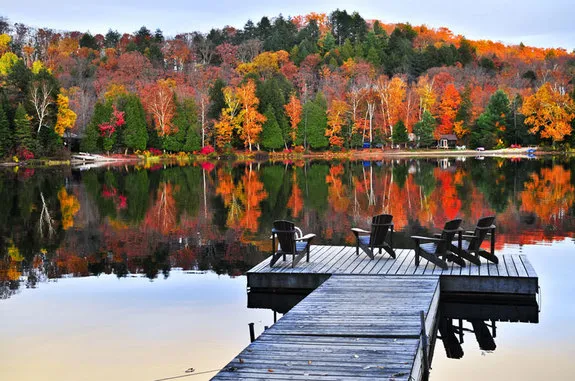
Day and night will be nearly the same length today (Sept. 23), 2011's autumnal equinox.
Equinoxes occur twice a year, in the fall and the spring. Technically, the real point of equinox is one instant when the sun is directly in line with Earth's equator. This year, that instant is at 5:04 a.m. Eastern time on Friday, Sept. 23.

Despite the term, day and night are not exactly equal on the equinox, but in the days surrounding the event, days and nights around the world do last close to 12 hours each. As the Earth continues in its orbit, nights lengthen and days shorten at the higher latitudes, while little change in day length occurs around the equator.
Behind these changes in day length is Earth's tilt. Our planet rotates with a tilt of 23.5 degrees on its axis. When the northern hemisphere is tilted toward the sun, it's summertime for the north and winter for the south. The other half of the year, the southern hemisphere tilts toward the sun and experiences relatively balmy temperatures while northerners shiver.
The changes in daylight mark big changes for many plants and animals. The shortening days trigger trees to lose their leaves, while animals at the high latitudes go through biological changes, especially ones focused on reproduction. The male Siberian hamster, for example, experiences a swelling of the testes up to almost 17 times their normal size when the days get shorter.
Humans are not as seasonal as the Siberian hamster, but many cultures do celebrate the equinoxes. Pagans and Wiccans celebrate Mabon on the fall equinox, a thanksgiving ritual. The spring, or vernal, equinox is a national holiday both in Egypt and in Japan. During the French Revolution, the fall equinox even became the official start of a new year. The French monarchy was abolished the day before the equinox in 1772, so revolutionaries pegged the start of their new calendar to the autumnal equinox. The system lasted until 1805.
Editor's note: This article was updated at 2:35 p.m. Eastern Time to correct a typo in the date of the French Revolution.
Get the world’s most fascinating discoveries delivered straight to your inbox.
You can follow Live Science senior writer Stephanie Pappas on Twitter @sipappas. Follow LiveScience for the latest in science news and discoveries on Twitter @livescience and on Facebook.

Stephanie Pappas is a contributing writer for Live Science, covering topics ranging from geoscience to archaeology to the human brain and behavior. She was previously a senior writer for Live Science but is now a freelancer based in Denver, Colorado, and regularly contributes to Scientific American and The Monitor, the monthly magazine of the American Psychological Association. Stephanie received a bachelor's degree in psychology from the University of South Carolina and a graduate certificate in science communication from the University of California, Santa Cruz.