















Mozart's Death Was Written in the Key of (Vitamin) D

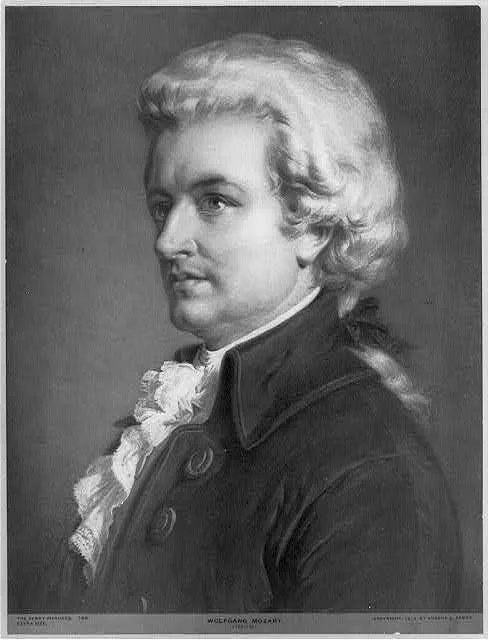
This musical prodigy was composing by age five and wrote his first symphony by age 10. As an adult, his music was extraordinarily complex, drawing influence from many different styles, and considered radical at the time. He composed more than 600 pieces—including concertos, operas, and symphonies—in his short life and is considered the most significant European classical composer.
If Wolfgang Amadeus Mozart had spent a few minutes basking in the sun, it might have forestalled his untimely death, researchers are saying.
The sun would have upped the young composer's levels of vitamin D, an important vitamin in fighting off disease. Our bodies make vitamin D from ultraviolet B (UVB) light from the sun, though it also is found in fish and a few other foods. (Two hundred years after Mozart's time, it is also available in pill form.)
In many places during the winters, UVB levels in sunlight are too low to make the vitamin in our skin. Where Mozart lived, in Vienna, these low levels of UVB rays would have easily caused vitamin D deficiencies, two researchers write in a letter in the June issue of the journal Medical Problems of Performing Artists.
Sunless nights
D. William Grant, of the Sunlight, Nutrition and Health Research Center in San Francisco, and Stefan Pilz of the Medical University of Graz in Austria suggest that these low levels of ultraviolet B rays during the winter, along with Mozart's nocturnal habits (he often wrote through the night and slept through the day), could have made him vitamin D-deficient.
"Mozart did much of his composing at night, so would have slept during much of the day. At the latitude of Vienna, 48 degrees N, it is impossible to make vitamin D from solar ultraviolet-B irradiance for about 6 months of the year," the authors write. "Mozart died on December 5, 1791, two to three months into the vitamin D winter."
Mozart had been sickly for years. This deficiency could have led to an increased number of infections, especially a few months into winter. (Vitamin D lasts 4 to 6 weeks in the human body). The writers hypothesize that the day Mozart died at age 35 was two to three months into the "vitamin D winter," when ultraviolet B rays are lowest.
Get the world’s most fascinating discoveries delivered straight to your inbox.
Other theories
Many theories have been raised about the nature of Mozart's death, ranging from head trauma to rheumatic fever.
Vitamin D deficiencies have taken the lives of other composers, most notably Gustav Mahler, who died in May 1911 of a bacterial infection around the lining of his heart. Such bacterial infections are easier to fight off when vitamin D levels are normal.
Whether Mozart had low vitamin D levels may never be determined; his grave hasn't been identified. A skull that might be Mozart's has been analyzed, with inconclusive results. If researchers were able to find and exhume his body, they could examine it for indications of vitamin D deficiency, which would show in his bones.
You can follow LiveScience staff writer Jennifer Welsh on Twitter @microbelover. Follow LiveScience for the latest in science news and discoveries on Twitter @livescience and on Facebook.

Jennifer Welsh is a Connecticut-based science writer and editor and a regular contributor to Live Science. She also has several years of bench work in cancer research and anti-viral drug discovery under her belt. She has previously written for Science News, VerywellHealth, The Scientist, Discover Magazine, WIRED Science, and Business Insider.