













Egypt Opens 7 New Tombs to Tourists

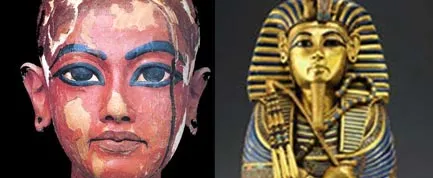
Egypt's antiquities ministry opened seven new tombs to tourism Monday (May 23), including the final resting place of King Tut's head bean counter and a tomb built for a general who would become king.
Zahi Hawass, the Minister of State for Antiquities in Egypt, announced the opening on his website on May 22. Since Egypt's revolution that ousted president Hosni Mubarak, tourism has faltered, and Egypt's tourism minister has forecasted a 25 percent drop in tourist revenue for 2011.
The seven tombs are located in South Saqqara, about 19 miles (30 km) south of Cairo. All seven tombs date to the New Kingdom, a period that encompasses the 16th century B.C. to the 11th century B.C.
The tomb of King Tutankhamen's treasurer, Maya, is unfinished but features carved reliefs of images of Maya and his wife Merit. Maya was an important figure in Tutankhamen's administration, helping the boy king re-open temples in the capital city of Luxor, which had been abandoned in the previous king's reign. [Read: What Killed King Tut?]
Likewise, Tut's general Horemheb was one of the most important figures in Egypt at the time of Tut's reign, responsible for rebuilding the country's foreign affairs. Horemheb had a tomb built for him in South Saqqara, but he would later ascend to the throne of Egypt and be buried in the Valley of the Kings. His wife, Mutnojdmet, was buried in the South Saqqara tomb instead.
The five other tombs now open to the public include a limestone-and-mudbrick tomb belonging to the royal butler of the pharaohs Akhenaten and Tutankhamen. Inside the butler's tomb, archaeologists found 56 coffins, most containing the bodies of children afflicted by disease. Some of the tombs were discovered in the 1840s, but none were fully explored until the 1970s. A team of Dutch researchers from Leiden University is now in charge of excavating and restoring the tombs.
The other four tombs belong to:
Get the world’s most fascinating discoveries delivered straight to your inbox.
- Meryneith, a temple steward and scribe who became the High Priest of Aten and the High Priest at the Temple of Neith.
- Tia, the overseer of the treasury under Ramses II, whose tomb was also a mortuary temple to the god Osiris.
- Pay, the overseer of the harem under King Tut.
- Raia, a soldier and the son of Pay, who took over as harem overseer after his father's death.
You can follow LiveScience senior writer Stephanie Pappas on Twitter @sipappas. Follow LiveScience for the latest in science news and discoveries on Twitter @livescience and on Facebook.

Stephanie Pappas is a contributing writer for Live Science, covering topics ranging from geoscience to archaeology to the human brain and behavior. She was previously a senior writer for Live Science but is now a freelancer based in Denver, Colorado, and regularly contributes to Scientific American and The Monitor, the monthly magazine of the American Psychological Association. Stephanie received a bachelor's degree in psychology from the University of South Carolina and a graduate certificate in science communication from the University of California, Santa Cruz.