













Close Call: Ozone Hole Nearly Opens Over Arctic

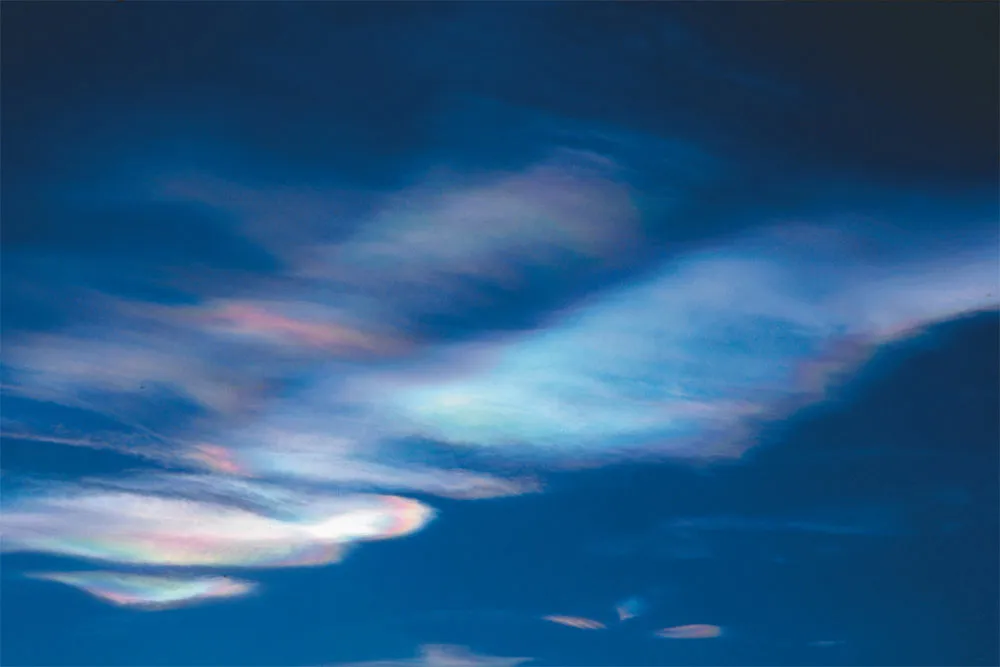
The loss of ozone over Antarctica has been well-known since the late 1970s, when a major report exposed the crisis happening on the continent. But this spring, an Arctic hole in the ozone nearly opened up over the northern United Kingdom, Scandinavia and Russia.
Unusually cold temperatures in the stratosphere, the second layer of Earth's atmosphere, caused the Arctic near-miss, according to a statement by Jonathan Shanklin, the head of meteorology and ozone monitoring for the British Antarctic Survey (BAS). Most years, Shanklin wrote, the Arctic stratosphere is too warm for ozone-depleting chemical reactions to take place. This year, however, temperatures dove enough to destroy more than 40 percent of Arctic ozone.
Without the protective sheeting of ozone, more ultraviolet (UV) radiation reaches the Earth's surface. That makes ozone levels important for public health, said Ross Salawitch, a professor of chemistry and biochemistry at the University of Maryland who studies atmospheric chemistry.
"The real public health point of view is that people with sensitive skin will take a shorter time to achieve sunburn with less ozone," Salawitch, who was not involved with the BAS research, told LiveScience. "People should pay attention to the UV index reports that weather services issue. Normally people just aren't thinking that they have to put on sun protection, sunglasses or sunscreen. They're not used to thinking of that in April." [You and the Sun: 10 Burning Questions]
Nonetheless, this year's ozone thinning is no reason to panic, said Salawitch, adding that the levels of UV people in the U.K. and Scandinavia experienced this spring were "well within the realm of what humans are exposed to" in sunnier areas such as the tropics.
Ingredients for an ozone hole
Ozone is a molecule made of three oxygen atoms. It's a pollutant with a sharp chlorine smell on Earth's surface, but high in the atmosphere, ozone gas prevents cancer-causing UV radiation from reaching ground level.
Get the world’s most fascinating discoveries delivered straight to your inbox.
To open a hole in this protective layer of ozone, you need three things, Salawitch said: Sunlight, halogens and low temperatures. Sunlight is present all the time, especially in spring. Halogens, especially the pollutants chlorine and bromine, are also always present due to human pollution. (The Montreal Protocol, a 1989 treaty which phased out the industrial production of these substances, is working properly, Salawitch said, but bromine and chlorine persist in the atmosphere for 50 to 100 years and so will remain a danger for years to come.)
Low temperatures, on the other hand, are rare in the Arctic stratosphere. Until the temperatures reach minus 108.4 degrees Fahrenheit (minus 78 degrees Celsius), chlorine and bromine stay in a form that doesn't react with ozone.
"When the temperature cools or drops below a threshold where clouds can exist in the stratosphere, then the chemistry all of the sudden makes a dramatic change," Salawitch said. "Those halogens are transformed into chemical compounds that can react rapidly with ozone."
Strange stratospheric weather
This year, a polar wind system known as the polar vortex was unusually quiet and stable, confining cold temperatures to the Arctic area. The temperature plummeted enough that had it been in the Antarctic, an ozone hole would have opened, Shanklin wrote. Fortunately, the Arctic has a greater cushion of ozone to start with, so the ozone layer merely thinned out.
Now that the vortex has broken up, air from outside the Arctic can get in and replenish the ozone layer, Salawitch said.
Shanklin reported that the ozone layer over the U.K. hit its low point March 29 and is now on the mend.
You can follow LiveScience senior writer Stephanie Pappas on Twitter @sipappas. Follow LiveScience for the latest in science news and discoveries on Twitter @livescience and on Facebook.

Stephanie Pappas is a contributing writer for Live Science, covering topics ranging from geoscience to archaeology to the human brain and behavior. She was previously a senior writer for Live Science but is now a freelancer based in Denver, Colorado, and regularly contributes to Scientific American and The Monitor, the monthly magazine of the American Psychological Association. Stephanie received a bachelor's degree in psychology from the University of South Carolina and a graduate certificate in science communication from the University of California, Santa Cruz.