














Itsy Bitsy, Teensy Weensy, Polka-Dotted … Bugs
This Research in Action article was provided to LiveScience in partnership with the National Science Foundation.
Isolated from the rest of the continents by vast stretches of ocean, Australia has an incredibly unique population of plants and animals – including one of the most diverse populations of plant bugs in the world.
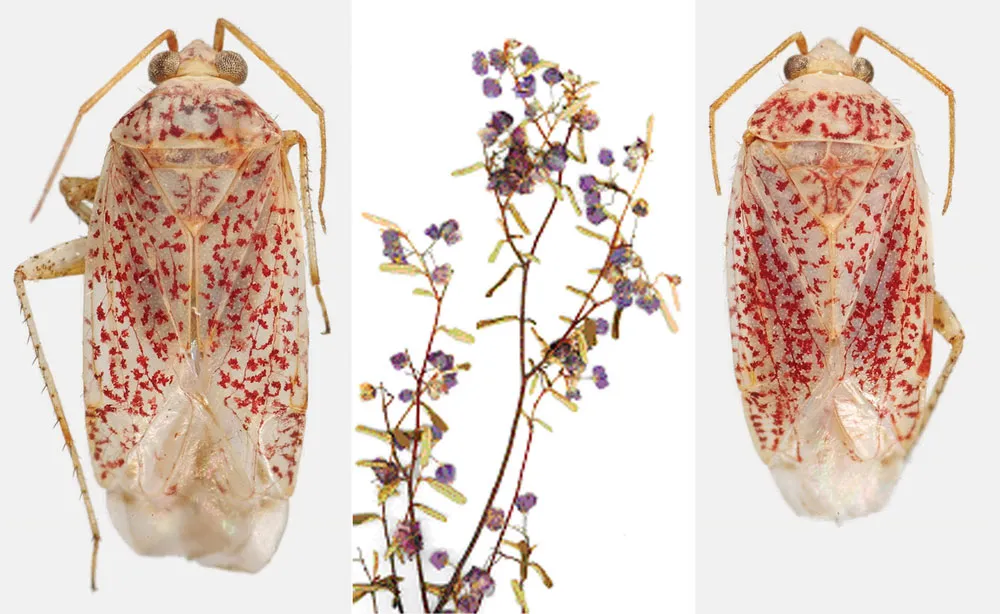
In 2010, curator Randall Schuh of the Division of Invertebrate Zoology at the American Museum of Natural History and his colleagues examined over 4,500 specimens of plant bugs from southern Australia, identifying a new genus, Wallabicoris, and 37 new species, including Wallabicoris ellae. The image above shows a male (left) and female (right) Wallabicoris ellae from Australia and their plant host, the common firebush, or Keraudrenia intergrifolia.
Plant bugs are the largest group of true bugs (Hemiptera) on Earth, with over 10,000 known species. W. ellae is unique in that it is a relatively large species by plant bug standards, a whopping 3.5 to 4 millimeters in length. By contrast, many plant bugs are only 2 millimeters long.
Most species of plant bug have a preferred host plant, which the bugs rely on for food and as a place to lay eggs. Typically, they don't damage their host unless their population on a single plant becomes unusually large, in which case the sap-sucking critters can cause minor damage. The common firebush, a flowering shrub, isW. ellae's preferred host.
Like other plant bugs in temperate areas of the world, W. ellae has a relatively short adult life span. These bugs spend 10.5 to 11 months in the egg stage, hatching in the spring, after the winter rains trigger their host plants to grow. They then mature, mate and die within a single month. "They go through the non-egg part of their lives pretty quickly," says Schuh.
Schuh's study contributed to the Planetary Biodiversity Inventory project funded by the National Science Foundation.
Get the world’s most fascinating discoveries delivered straight to your inbox.
Any opinions, findings, and conclusions or recommendations expressed in this material are those of the author and do not necessarily reflect the views of the National Science Foundation. See the Research in Action archive.