













Is Radiation Sickness Contagious?

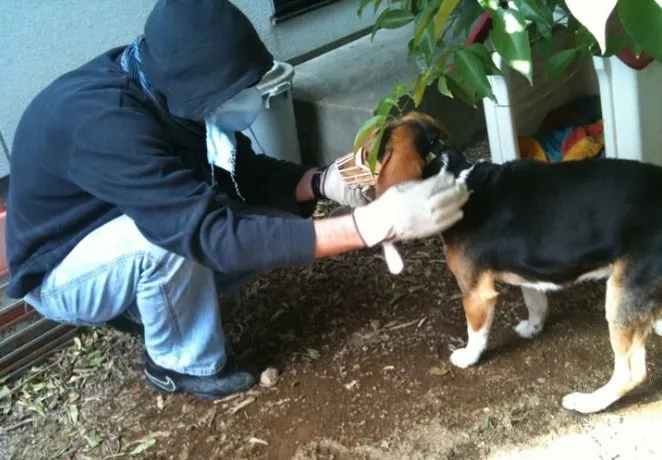
Evacuees from the area around the Fukushima nuclear power plant must be screened for radiation contamination before being granted admission to some nearby shelters. Those inside the facilities fear that radioactive materials that may have collected on the evacuees' clothing, skin or inside their bodies will radiate outward and harm others.
Is the fear legitimate? Is radiation exposure, in effect, contagious?
"If someone has contamination on their outside – on their skin and clothing – prudent practice would be that you would want to eliminate that," Peter Caracappa, a health physicist and radiation safety expert at Renssealaer Polytechnic Institute, told Life's Little Mysteries. "Washing it off is good for them and good for everybody around them."
But once a person's skin and clothing are washed, his or her ability to expose others to radiation is eliminated, Caracappa said. "If they ingested or inhaled radioactive material and it has been deposited inside of them, there is no way that they're going to transfer that to other people."
Caracappa calculated that in order to deliver a radiation dose of 1 millisievert to a person standing 1 meter away, "19 billion becquerels of radioactive iodine would have to be deposited in the contaminated person." To glean that much iodine 131 from the Tokyo water supply on its worst day of contamination, a person would have to have downed 94 million gallons of water – an impossible amount.
Furthermore, 1 millisievert of radiation exposure is not all that dangerous. It would increase a person's lifetime cancer risk by just 0.004 percent.
In short, once an exposed person's clothes and skin have been washed, they pose no health risk to those around them.
Get the world’s most fascinating discoveries delivered straight to your inbox.
This article was provided by Life's Little Mysteries, a sister site to LiveScience. Follow Natalie Wolchover on Twitter @nattyover

Natalie Wolchover was a staff writer for Live Science from 2010 to 2012 and is currently a senior physics writer and editor for Quanta Magazine. She holds a bachelor's degree in physics from Tufts University and has studied physics at the University of California, Berkeley. Along with the staff of Quanta, Wolchover won the 2022 Pulitzer Prize for explanatory writing for her work on the building of the James Webb Space Telescope. Her work has also appeared in the The Best American Science and Nature Writing and The Best Writing on Mathematics, Nature, The New Yorker and Popular Science. She was the 2016 winner of the Evert Clark/Seth Payne Award, an annual prize for young science journalists, as well as the winner of the 2017 Science Communication Award for the American Institute of Physics.