
-
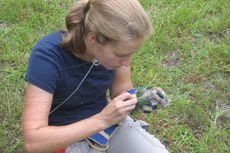 Parrot Pecking Order Hints at Humans' Social Lives
Opinion Researchers uses quantitative methods to understand how and why species such as parrots develop complex social societies and how those social relationships compare to other animals.
Opinion -
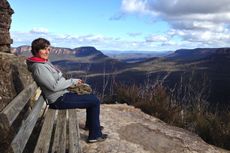 Urgently Examining Environmental Impacts of Fertilizer Run-off
Opinion As human activity alters the balance of nutrient cycles in nature, one mathematical biologist seeks answers to questions about how phosphorous pollution affects our lakes.
Opinion -
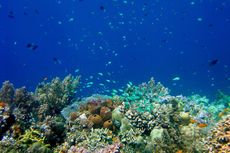 Balancing the Good and Bad: News for Coral Reefs
Opinion Marine ecologist Paul Sikkel discusses his passion for and work with coral reefs and the best ways to protect them.
Opinion -
 How Plants Affect the Global Carbon Cycle
Opinion Caroline Farrior uses math to understand the old plants play in the global carbon cycle so scientists will be able to predict the path of climate change.
Opinion -
 Computer Models Aid Kidney Disease Research
Opinion Ioannis Sgouralis of the National Institute for Mathematical and Biological Synthesis is using mathematical modeling to study how the kidneys behave in a range of different conditions.
Opinion -
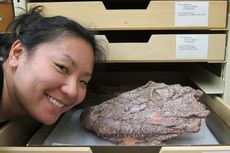 From Drawing to Morphology: Sandy Kawano
A childhood love of drawing leads Sandy Kawano into a branch of biology studying in animal body shapes
archaeology -
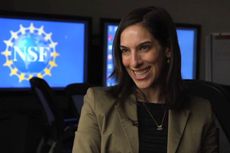 From Slot Machines to Self-Tracking Devices: An Anthropologist Story
Anthropologist Natasha Schüll seeks to understand our connections and responses to machines and technology.
education -
 Lemur Lady Campaigns for Endangered Lemurs
Renowned scientist and conservationist Patricia Wright battles to save one of the world’s most endangered primates.
land-mammals -
 NSF Research Helps UNESCO Preserve Subaks in Bali
Immersed in the world of Balinese water temples and cooperative farms, Anthropologist J. Stephen Lansing’s NSF funded research helped win UNESCO World Heritage Site status for Bali’s subaks.
human-behavior


