















The Volcanic Origin of Life

How the primitive Earth cooked up proteins is a chemical mystery. These molecules - vital to biological functions - are made of long strands of hundreds of amino acids, but researchers are unclear how even some of the shortest amino acid chains, called peptides, formed prior to the dawn of living organisms.
Recent experiments have demonstrated how a volcanic gas, carbonyl sulfide (COS), may have been instrumental in the "prebiotic" build-up of peptides.
There are several mechanisms for connecting amino acids. Organisms use enzymes, and chemists have identified other catalysts that can do the job. However, Leslie Orgel from the Salk Institute points out that few of these things were ingredients of Earth's environment billions of years ago.
"With carbonyl sulfide, we have a very realistic agent," Orgel said. This gas is known to fume out of volcanoes today and was likely present in the planet's fiery past.
Orgel and colleagues formed peptides by adding COS to a watery solution containing various amino acids at room temperature. About 7 percent of the amino acids formed pairs and triplets. This peptide yield increased to as high as 80 percent when the researchers added metal ions to the solution.
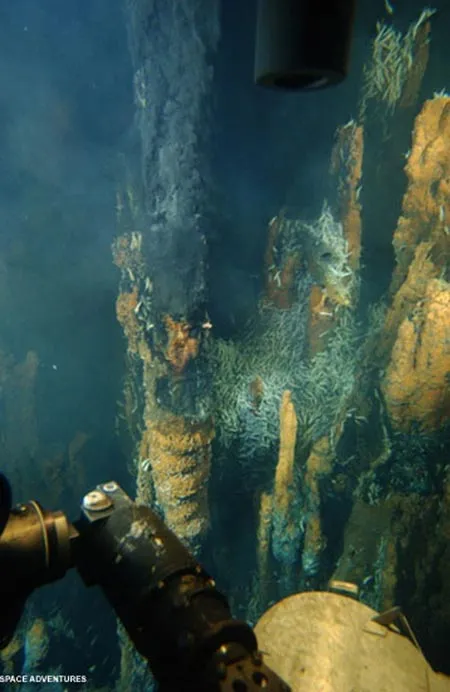
The results, published in the Oct. 8 issue of the journal Science, lend credence to a theory that life arose near underwater volcanic vents, which to this day support thriving, self-contained ecosystems.
Because carbonyl sulfide breaks down quickly in water, the researchers speculate that chains of amino acids most likely formed on rocks near the COS source. Whether life could have blossomed on this ocean bed of peptides is not yet known.
Get the world’s most fascinating discoveries delivered straight to your inbox.
Interestingly, the amino acid building blocks may not have formed at the vents but instead may have rained down in comets and meteorites. Astronomers have identified many small organic molecules in space, which opens the possibility of peptide factories being seeded on places besides Earth.
"I think it likely that other planets with volcanic activity might have this sort of chemistry," Orgel said.
