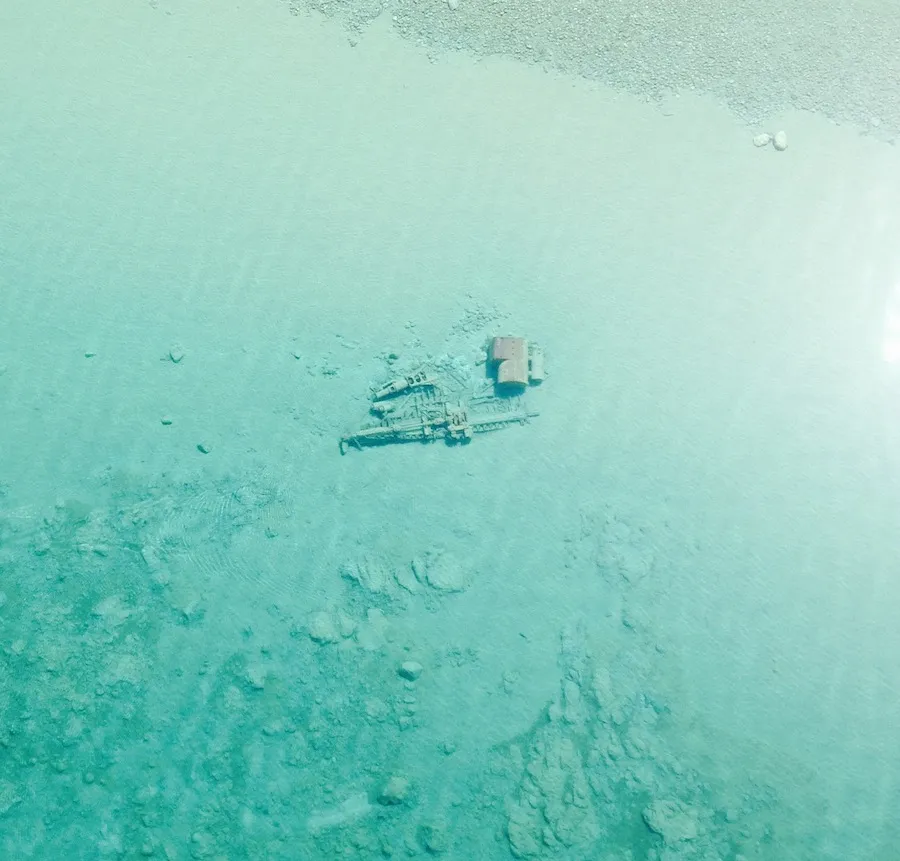
After an icy winter, springtime brought crystal clear waters to Lake Michigan. With such good visibility, an aircrew with the Coast Guard was able to spot several shipwrecks this month. [Read full story about the shipwrecks]
Usually the Coast Guard tries to find ships before they sink. A petty officer from the Coast Guard Air Station in Traverse City, Michigan, snapped these photos of the ghostly hulls with an iPhone on April 17 during a routine patrol over the lake. (Credit: Mitch Brown/U.S. Coast Guard Air Station Traverse City)
The wrecks were located in Manitou Passage, which was often a safe haven for cargo-laden ships traveling through Lake Michigan in the heydey of lumbering industry in the 19th century. (Credit: Mitch Brown/U.S. Coast Guard Air Station Traverse City)
This image shows the wreck of the James McBride, a 121-foot-long (37 meter) brig. In October 1857, the ship left the Manitou Islands full of wood to take to Chicago, but it ran aground in a storm. (Credit: Mitch Brown/U.S. Coast Guard Air Station Traverse City)
The remains of the James McBride rest in 5 to 15 feet of water near Sleeping Bear Point. (Credit: Mitch Brown/U.S. Coast Guard Air Station Traverse City)
The wrecks are popular among recreational divers, but vessels are protected under state law and it is illegal to take of disrupt artifacts at the underwater sites. (Credit: Mitch Brown/U.S. Coast Guard Air Station Traverse City)
This photo shows what's left of the Rising Sun, a 133-foot-long (40 m) steamer that got stranded in shallow water just north of Pyramid Point during a storm in October 1917. (Credit: Mitch Brown/U.S. Coast Guard Air Station Traverse City)
Sign up for the Live Science daily newsletter now
Get the world’s most fascinating discoveries delivered straight to your inbox.
Megan has been writing for Live Science and Space.com since 2012. Her interests range from archaeology to space exploration, and she has a bachelor's degree in English and art history from New York University. Megan spent two years as a reporter on the national desk at NewsCore. She has watched dinosaur auctions, witnessed rocket launches, licked ancient pottery sherds in Cyprus and flown in zero gravity. Follow her on Twitter and Google+.