 Live Science Plus






10 Easy Ways to Help Wildlife, Every Day (Photos)
You are now subscribed
Your newsletter sign-up was successful
Want to add more newsletters?

Delivered Daily
Daily Newsletter
Sign up for the latest discoveries, groundbreaking research and fascinating breakthroughs that impact you and the wider world direct to your inbox.
Once a week
Life's Little Mysteries
Feed your curiosity with an exclusive mystery every week, solved with science and delivered direct to your inbox before it's seen anywhere else.

Once a week
How It Works
Sign up to our free science & technology newsletter for your weekly fix of fascinating articles, quick quizzes, amazing images, and more

Delivered daily
Space.com Newsletter
Breaking space news, the latest updates on rocket launches, skywatching events and more!

Once a month
Watch This Space
Sign up to our monthly entertainment newsletter to keep up with all our coverage of the latest sci-fi and space movies, tv shows, games and books.

Once a week
Night Sky This Week
Discover this week's must-see night sky events, moon phases, and stunning astrophotos. Sign up for our skywatching newsletter and explore the universe with us!
Join the club
Get full access to premium articles, exclusive features and a growing list of member rewards.
The WCS (Wildlife Conservation Society) contributed these images to Live Science's Expert Voices: Op-Ed & Insights.
While Earth Day usually comes and goes with calls to recycle and save energy, it's also a reminder that there is much you can do to protect the countless animals that share the planet with us. The WCS (Wildlife Conservation Society) — a conservation organization that also runs the Bronx Zoo, New York Aquarium and other facilities — contributed these 10 wildlife images along with tips on how you can help these animals every day of the year.

Support ivory bans. How can you save a mighty African elephant? By supporting national and state ivory bans, whether in the United States or across the globe. The legal ivory market provides a front for illegal trade, enabling poaching and ivory trafficking, so banning all domestic ivory sales is the best way to protect elephants from poacher's guns. For More info, visit 96Elephants.org. (Credit: Julie Larsen Maher/WCS.)
2. Amur Tiger Stamp

Send a letter using a tiger stamp. On September 20, 2011, the U.S. Postal Service unveiled the Saving Wildlife Stamp, featuring an image of an Amur tiger cub. The extra 10 cents goes directly to wildlife programs including tiger conservation. The program has already raised more than $2.6 million. For more info, visit Tigerstamp.com. (Credit: USPS)
3. Vacations with heart

Be a responsible tourist. As you book your summer vacation, plan to visit a national park in the United States or abroad, such as pictured here in Lao PDR. If traveling internationally, look into how hard the country you will visit is working to protect its wildlife and wild places. For more info, visit the United Nation's World Tourism Association. (Credit: WCS Lao Program.)
4. Smart souvenir shopping

Don't buy illegal wildlife. While you are on that vacation, don't be tempted by cheap (or expensive) souvenirs that may, in fact, be protected wildlife. You'll not only be harming a species, you may get slapped with a fine. Visit the U.S. Fish and Wildlife Service Travel and Trade Page or The Convention on International Trade in Endangered Species of Wild Fauna and Flora (CITES) for more information. (Credit: WCS Indonesia Program.)
5. Animal safety

Prevent bird strikes. Wherever there is a glass window, there is the threat of a bird flying into it and dying. According to the American Bird Conservancy, some 300 million to 1 billion birds die each year from collisions. There are simple you can do to windows to make them more bird-friendly. To learn more, see the American Bird Conservancy flyer on bird collisions. (Credit: Julie Larsen Maher/WCS.)
6. Pet security

Keep kitty inside. Did you know that Fluffy and his counterparts kill as many as 3.7 billion birds a year in the United States alone? The answer is simple: let's keep kitty inside. For more info, check out this blog by ornithologist Steve Zack. (Credit: Chip Weiskotten/WCS.)
7. Chemical safety

No more microbeads. Used in soaps and cosmetics, plastic microbeads do more than exfoliate: they wind up passing through sewage treatment plants, and then get discharged into waterways where they can kill fish and other marine life. Legislation is underway to ban them in various states and federal waters. To learn more, visit NOAA's page on microbeads. (Credit: Julie Larsen Maher/WCS.)
8. Reduce, reuse, recycle

Reduce plastic use, save a whale. A recent report published by the U.N. Environment Programme (UNEP) says plastic waste causes $13 billion in damage every year to marine life. This includes everything from whales getting entangled in discarded fishing nets to endangered sea turtles choking on plastic bags. By reducing the amount of disposable plastics we all consume, we reduce the waste stream — and the risk that these items can wind up in the marine environment. For more info, visit NOAA's marine debris page. (Credit: Salvatore Cerchio/WCS.)
9. Sustainable food sources

Eat sustainable seafood. Before you order that sushi deluxe, consider where it came from. Many species are overfished; some are nearing ecological extinction. Becoming an informed seafood consumer can have a direct impact on reducing demand for overfished species. For more info, visit Seafood Watch. (Credit: Julie Larsen Maher/WCS.)
10. Local stay-cations
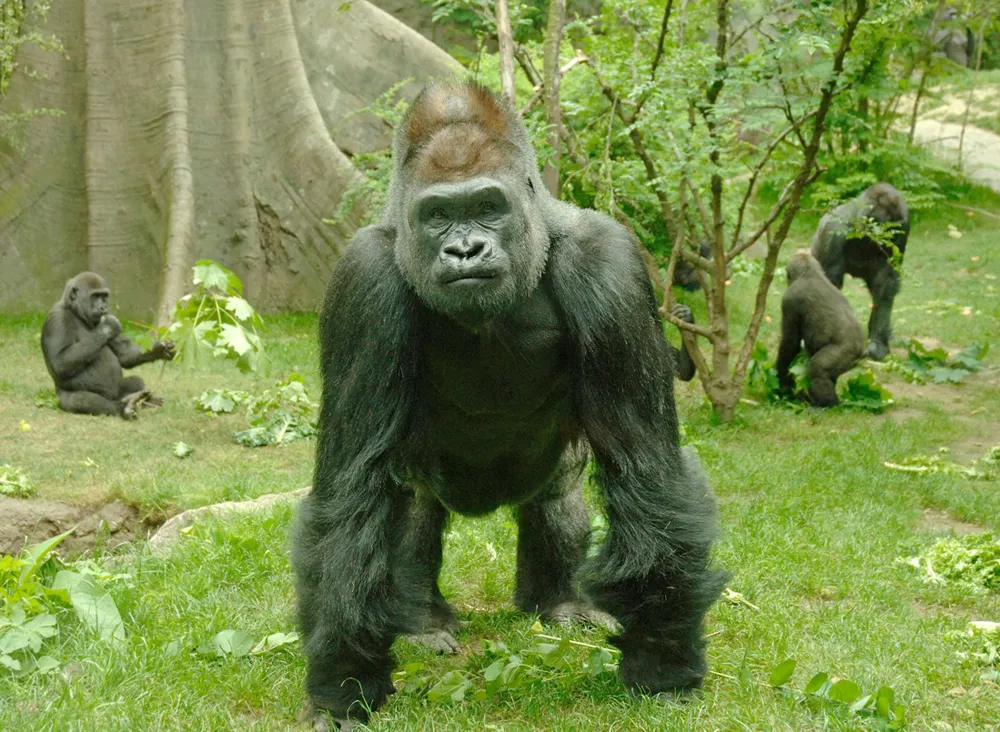
Visit an Association of Zoos and Aquariums (AZA) zoo or aquarium. AZA Accredited zoos and aquariums, with more than 3,000 conservation projects worldwide, are one of the largest single sources of conservation funding in the United States, contributing $160 million annually to conservation programs around the world. At WCS's Bronx Zoo (yes, we are biased), the Congo Gorilla Forest has raised more than $12 million for conservation in Central Africa. For more info, check out this speech by WCS CEO Cristián Samper on the role of zoos and conservation. (Credit: Julie Larsen Maher/WCS.)
Follow all of the Expert Voices issues and debates — and become part of the discussion — on Facebook, Twitter and Google+. The views expressed are those of the author and do not necessarily reflect the views of the publisher. This version of the article was originally published on Live Science.
