 Live Science Plus





You are now subscribed
Your newsletter sign-up was successful
Want to add more newsletters?

Delivered Daily
Daily Newsletter
Sign up for the latest discoveries, groundbreaking research and fascinating breakthroughs that impact you and the wider world direct to your inbox.

Once a week
Life's Little Mysteries
Feed your curiosity with an exclusive mystery every week, solved with science and delivered direct to your inbox before it's seen anywhere else.

Once a week
How It Works
Sign up to our free science & technology newsletter for your weekly fix of fascinating articles, quick quizzes, amazing images, and more

Delivered daily
Space.com Newsletter
Breaking space news, the latest updates on rocket launches, skywatching events and more!

Once a month
Watch This Space
Sign up to our monthly entertainment newsletter to keep up with all our coverage of the latest sci-fi and space movies, tv shows, games and books.

Once a week
Night Sky This Week
Discover this week's must-see night sky events, moon phases, and stunning astrophotos. Sign up for our skywatching newsletter and explore the universe with us!
Join the club
Get full access to premium articles, exclusive features and a growing list of member rewards.
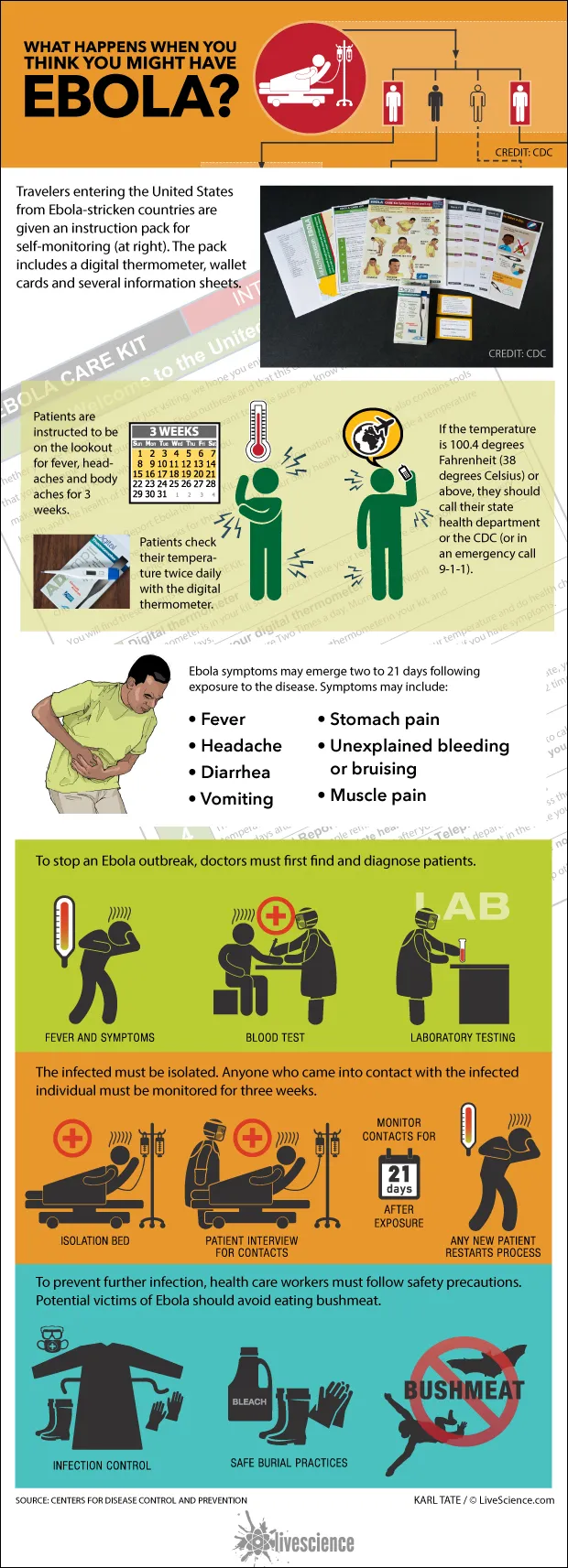
Travelers entering the United States from Ebola-stricken countries are given an instruction pack for self-monitoring (at right). The pack includes a digital thermometer, wallet cards and several information sheets.
Patients are instructed to be on the lookout for fever, headaches and body aches for 3 weeks. Patients check their temperature twice daily with the digital thermometer. If the temperature is 100.4 degrees Fahrenheit (38 degrees Celsius) or above, they should call their state health department or the CDC (or in an emergency call 9-1-1).
• Fever
• Headache
• Diarrhea
• Vomiting
• Stomach pain
• Unexplained bleeding
or bruising
• Muscle pain
To stop an Ebola outbreak, doctors must first find and diagnose patients. The infected must be isolated. Anyone who came into contact with the infected individual must be monitored for three weeks. To prevent further infection, health care workers must follow safety precautions. Potential victims of Ebola should avoid eating bushmeat.

