
 Live Science Plus


Photos: Robotic Furniture Morphs into Cool Shapes

'Roombots'
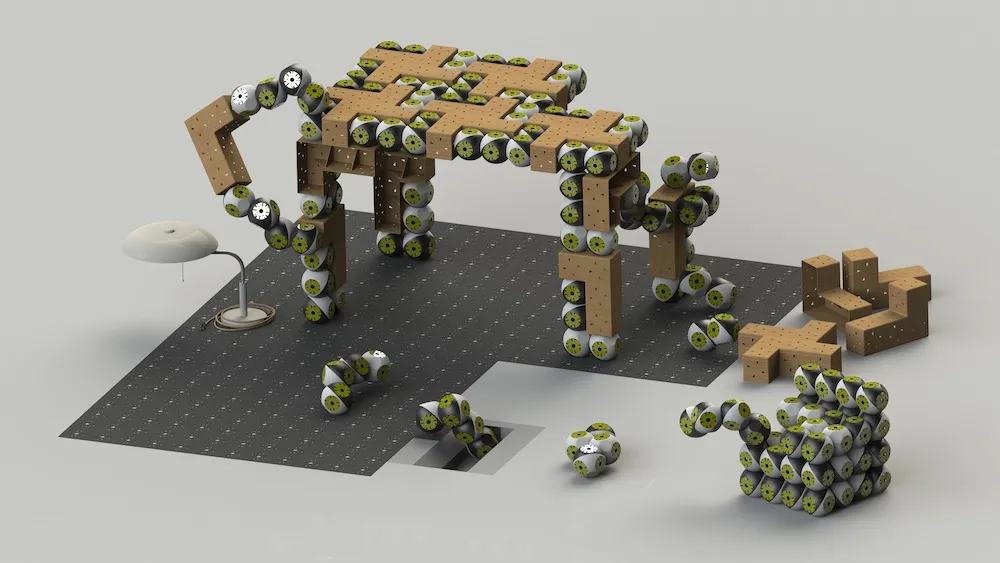
A group of scientists in Switzerland is developing small robotic modules, called "roombots," which fit together like LEGO bricks to form structures that can fit together and morph into different shapes.
Robot Modules

Each roombot (not to be confused with the robot vacuum cleaner Roomba) is a completely independent unit — a 9-inch-long (22 centimeters) block that resembles a pair of dice joined together. It contains a battery and three small motors that allow it to move in three different dimensions, and has a set of retractable claws so it can hook onto other blocks to create bigger structures or onto connectors in its environment.
Roving Furniture

The idea of roving furniture may be somewhat disconcerting, but the researchers envision them being used to provide assistance to elderly or disabled people.

Assisting the Elderly

The bots could move table and chairs around a room, and could be especially helpful to disabled or elderly people, by bring objects closer or moving them out of the way, the researchers said.
Self-Assembling Structures

The team is now experimenting with different ways of controlling the furniture, using tablet computer, or speech or gesture recognition.
Robot Helpers

The robots are still just a prototype — they might be available within about 20 years, the researchers estimated. The group is planning a newer generation of roombots for assisted living environments, which could actually interact with people.
