













Motorcycle Accident Turns Man's Heart Around in His Chest

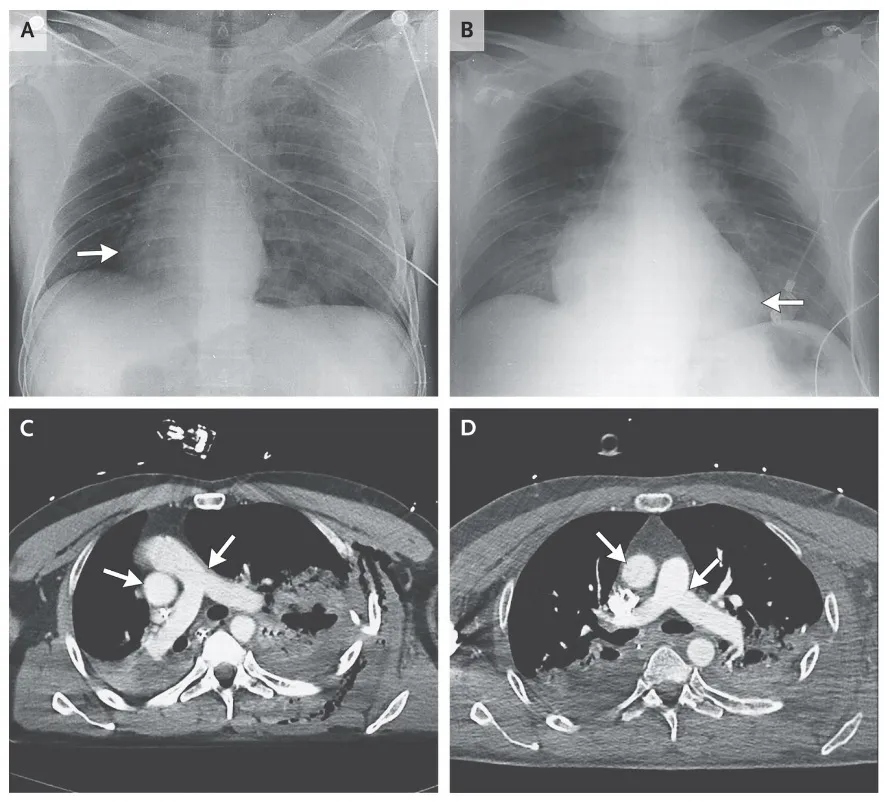
A motorcycle accident in Italy caused a man's heart to rotate within his body, and end up in the right side of his chest — a very traumatic injury from which he survived, according to a new report of his case.
Doctors at the emergency department who treated the 48-year-old man discovered that his heart was in an unusual place when they tried to listen to his heart sounds and rhythms. An X-ray and CT scan of the man's chest showed that his heart had turned 90 degrees to the right, the doctors wrote in the report, published today (May 7) in the New England Journal of Medicine.
"This is a very interesting anatomical finding, and it's very unusual," said Dr. Gregory Fontana, chairman of the department of cardiothoracic surgery at Lenox Hill Hospital in New York City, who wasn't involved in the case.
"I had never seen anything like it," Fontana said, adding that he is surprised the man survived from such trauma. "What's unique about this case is the way the heart rotated so far in the other direction, and the patient was still awake and alert," Fontana told Live Science. [16 Oddest Medical Case Reports]
At first, it may seem logical to think that the man's heart had rotated because of his body getting violently twisted during the accident, but in fact, the heart rotation probably happened in the minutes, or even an hour, after the accident, Fontana said.
The doctors found that injuries to the man's lungs at the time of the accident caused air to leak from the lungs and build up in the space in the chest, they wrote in the report.
Most likely, this buildup of air pushed the heart, causing it to turn rightward, Fontana said.
Get the world’s most fascinating discoveries delivered straight to your inbox.
After doctors drained the air, the man's heart rotated to the left, and by 24 hours later, it had returned to its original position, according to the report.
In addition to punctured lungs, the man also suffered broken ribs and a ruptured spleen. Although the heart itself wasn't injured, the rotation obstructed the blood vessels and caused a drop in his blood pressure, the doctors said.
Although it's uncommon, it is possible to find someone's heart on the right side of the chest — for example, in people with some birth defects, Fontana said. Also, if the right lung is removed during cancer treatment, it can create a free space for the heart to move into, he said.
"The structures in the back of the heart, and the big arteries, are fixed to the spine and to the tissue, but the heart kind of floats around in the sac around it," Fontana said. It's possible that some looseness in the sac or an injury to the sac around the heart allowed the mobile part of the heart to rotate on the fixed parts and end up on the wrong side of the chest, he said.
"It's an amazing thing about medicine — that there are so many things we haven't seen yet, and will see in the future with great fascination," Fontana said.
Email Bahar Gholipour. Follow us @LiveScience, Facebook & Google+. Original article on Live Science.
