














The Surprising Product Used to Attract Jaguars

When Brian Fantana (Paul Rudd) wants to impress buxom newcomer Veronica Corningstone (Christina Appelgate) in the movie "Anchorman," he opts for "sex panther," a vile concoction that gets him sprayed with a fire hose. "They done studies, you know — 60 percent of the time, it works every time," Fantana says.
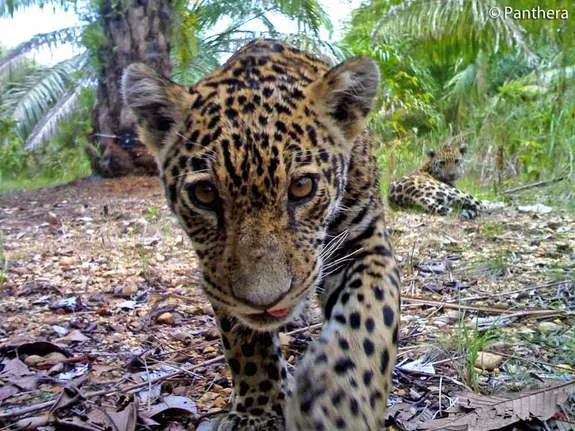
But while a (fake) big cat's scent fails to attract people, a (real) human scent attracts jaguars. When Miguel Ordeñana, a biologist with the Natural History Museum of Los Angeles, wants to lure jaguars to his camera traps, which he uses to study the big cats in Nicaragua, he uses a surprising product: Calvin Klien Obsession for Men, according to Scientific American.
Apparently the scent has civetone in it, a chemical which originally derives from the scent glands of civets, nocturnal cats native to the Asian and African tropics. One Bronx Zoo researcher tried many types of cologne, and this was the one that attracted jaguars, Scientific American reports. "What we think is that the civetone resembles some sort of territorial marking to the jaguar, and so it responds by rubbing its own scent on it," Ordeñana said.
Email Douglas Main or follow him @Douglas_Main. Follow us @livescience, Facebook or Google+.
Get the world’s most fascinating discoveries delivered straight to your inbox.
