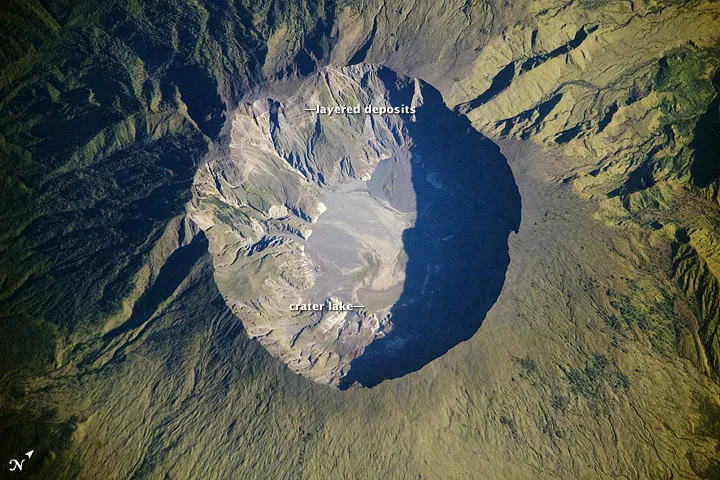
The biggest volcanic eruption ever recorded by humans was the explosion of Mount Tambora on Sumbawa Island, Indonesia, in 1815. It ranked a 7 (or "super-colossal") on the Volcanic Explosivity Index, the second-highest rating in the index.
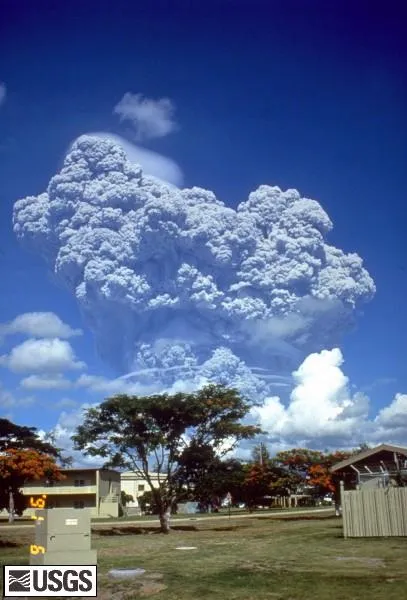
The gas and other particles spewed high into the atmosphere during the 1991 eruption of Mount Pinatubo reduced global temperatures by about 0.9 degrees Fahrenheit (0.5 degrees Celsius) during the following year.
The 1991 eruption of Mount Pinatubo ejected more than 1 cubic mile (5 cubic kilometers) of material into the air and created a column of ash that rose 22 miles (35 km) in the atmosphere.
The largest volcanic blast of the 20th century was the eruption of Novarupta one of a chain of volcanoes on the Alaska Peninsula, part of the Pacific Ring of Fire in 1912. It was a 6 (out of a possible 8) on the Volcanic Explosivity Index.
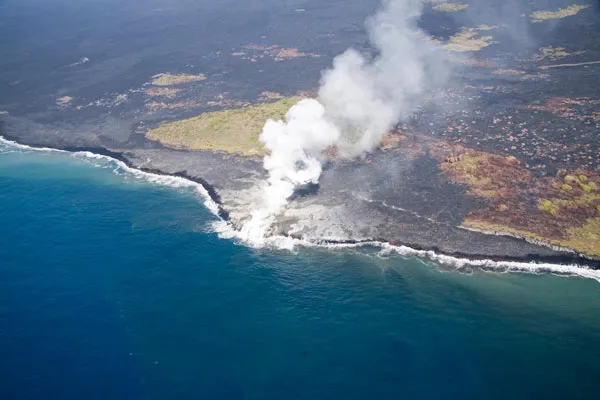
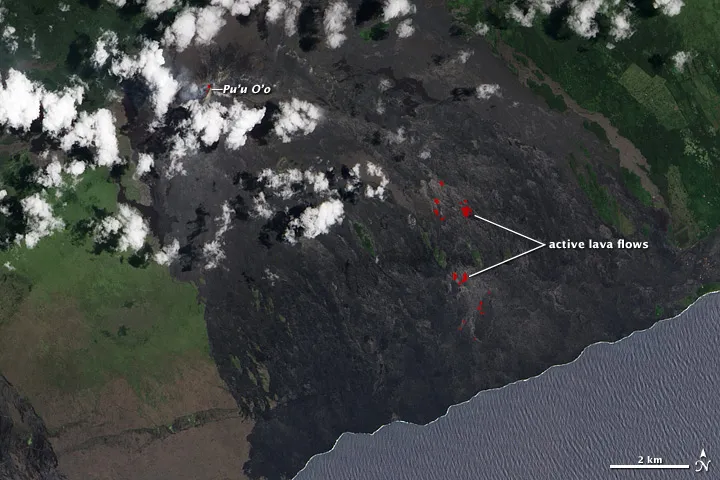
Hawaii's Kilauea volcano, one of the most active on Earth, has been erupting continuously for more than 29 years, beginning Jan. 3, 1983.
Kilauea erupted 200 years ago, sending speeding lava flows down its peaks and killing more than 400 people, including Hawaiian warriors. It was the deadliest volcanic eruption on record in what is now the United States.
Kilauea means "spewing" or "much spreading" in Hawaiian.
More than 90 percent of Kilauea's surface is covered by lava less than 1,100 years old.
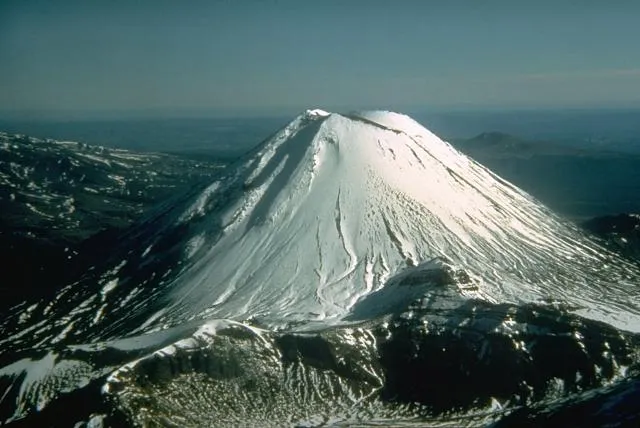
Stratovolcanoes are tall, steep, conical structures that periodically erupt explosively and are commonly found where one of Earth's plates is subducting below another, producing magma along a particular zone.
The Hawaiian shield volcanoes are the largest mountains on Earth. The total height of Mauna Kea, below and above sea level, is 33,500 feet (10,210 meters), making it taller than even Mount Everest.
The largest volcanoes on Earth are shield volcanoes, which have broad, gentle slopes built by fluid basalt lavas.
Hawaii's Mauna Loa volcano is the world's largest active volcano, rising 13,677 feet (4,170 m) above sea level and more than 28,000 feet (8,534 m) from the deep ocean floor. It has a volume of 19,000 cubic miles (80,000 cubic kilometers).
The United States ranks third, behind Indonesia and Japan, in the number of historically active volcanoes, according to the U.S. Geological Survey.
More than 80 percent of the Earth's surface above and below sea level is of volcanic origin.
About 10 percent of the more than 1,500 volcanoes that have erupted in the past 10,000 years are located in the United States, according to the U.S. Geological Survey.
There are 65 volcanoes in the United States and its territories that scientists consider active, including Mount St. Helens.
The most destructive eruption in U.S. history was the May 18, 1980, eruption of Mount St. Helens.
During the nine hours that Mount St. Helens erupted in 1980, the volcano spewed about 540 million tons of ash over an area of more than 22,000 square miles (57,000 square kilometers).
The Mount St. Helens eruptions caused the largest terrestrial landslide in recorded history, reducing the mountain's summit by about 1,300 feet (400 meters).
The majority of Earth's volcanoes are found on the seafloor, along the mid-ocean ridge a chain of volcanic peaks that rings the planet and the spot where many of Earth's plates spread apart.
The deepest active submarine eruption seen to date is of the volcano West Mata, which lies in the Lau Basin near the islands of Fiji in the southwestern Pacific. It was detected in 2008 and occurred at a depth of 3,900 feet (1,200 meters).
The southernmost active volcano on the planet is Antarctica's Mount Erebus. It is also home to Earth's only long-lived lava lakes.
"Lahar" is an Indonesian word that refers to a type of volcanic flow: a mixture of rock debris and water that originates on the slopes of the volcano. Typically it forms when snow or ice on a volcano is melted by volcanic material.
A pyroclastic flow an avalanche of hot ash, pumice, rock fragments and volcanic gas that rushes down the side of a volcano, staying close to the ground can travel 62 mph (100 kph), according to the U.S. Geological Survey.
The temperature within a pyroclastic flow may be greater than 932 degrees Fahrenheit (500 degrees Celsius), sufficient to burn and carbonize wood.
The mild eruptions of Italy's Stromboli Volcano are so frequent and numerous that an entire style of volcanism "strombolian" is named after the volcano. Strombolian eruptions have nearly continuous lava fountaining along with emissions of gas, ash and volcanic bombs.
When Nabro, a stratovolcano in the northeast African nation of Eritrea, rumbled to life late in the evening of June 12, 2011, it was the first eruption of the volcano in recorded history, according to NASA.
There are about 1,500 potentially active volcanoes worldwide, according to the U.S. Geological Survey, not including the continuous belt of volcanoes on the ocean floor.
Hawaiian volcanoes can form a type of volcanic glass called Pele's hair, named for Pele, the Hawaiian goddess of volcanoes. The long, thin glass threads form as molten basaltic glass stretches out.
Bits of lava in lava fountains can cool quickly to form chunks of gas called Pele's tears. They are black and often found on the end of strands of Pele's hair.
When Pliny the Younger chronicled the catastrophic eruption of Mount Vesuvius in A.D. 79, he ended up lending his name to the explosive type of eruption Vesuvius exhibited: a plinian eruption.
Modern humans have never witnessed a supervolcano eruption. The planet's most recent supervolcano eruption happened about 74,000 years ago in Indonesia.
At Yellowstone, the Grand Prismatic Spring is the largest hot spring in the United States and the third largest in the world.
A volcanic bomb is a lava fragment that is rounded as it flies through the air.
Mount Etna has one of the longest documented histories of activity on Earth. Humans have been noting its eruptions since 1500 B.C.
Sicily's Mount Etna is Italy's most active volcano.
Mount Etna is the largest active volcano in Europe.
The Yellowstone National Park area overlies the Yellowstone Caldera, an active supervolcano that last erupted many thousands of years ago but still fuels some 10,000 geothermal features (geysers and hot springs) that's half of the world's total.
Phreatic eruptions are stream-driven eruptions that happen when water beneath or above the ground is heated up, potentially causing it to boil and "flash to steam," creating an explosion, according to the U.S. Geological Survey.
The infamous Pacific Ring of Fire is a string of volcanoes strewn around the perimeter of the Pacific Ocean that produces some of the world's most dramatic and dangerous eruptions. This perimeter is where many plates subduct beneath one another.
The Pacific Ring of Fire is home to 452 volcanoes that's 75 percent of the world's active and dormant volcanoes.
Klyuchevskaya Volcano on Russia's Kamchatka Peninsula is the largest active volcano in the Northern Hemisphere.
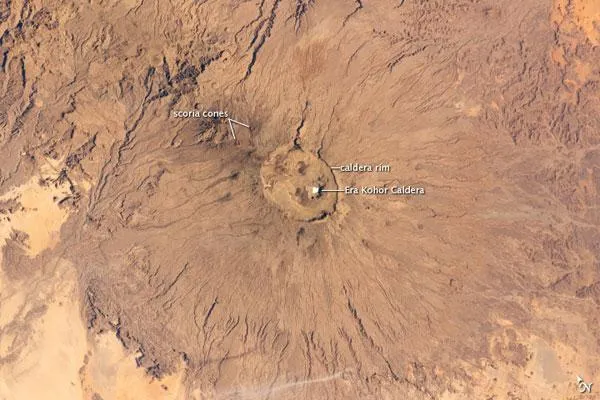
A caldera is the circular depression in the center of a volcano's summit that forms after a big eruption, when the volcano collapses in on itself after spewing out ash, lava and gases.
The simplest type of volcano is a cinder cone, which forms as gas-charged lava is thrown into the air, breaks into smaller pieces called cinders and falls around a volcanic vent, according to the U.S. Geological Survey.
In 1943 a cinder cone started growing on a farm near the Mexican village of Parícutin, eventually rising to a height of 1,200 feet (366 meters). During its nine years of erupting, the volcano covered about 100 square miles (260 square kilometers) with ashes and destroyed the town of San Juan, according to the U.S. Geological Survey.
Ol Doinyo Langai in Tanzania is the only volcano in the world that erupts what is called natrocarbonatite lava, which is rich in calcium, sodium and potassium but low in silica (silicon dioxide). Its lava is extremely cool (for lava) and unusually fluid.
Alaska's volcanoes make up well over three-quarters of the U.S. volcanoes that have erupted in the last 200 years, according to the Alaska Volcano Observatory. Alaska has 50 volcanoes that have been active in historic times.
The most active volcano on Earth is Mount Yasur on Tanna Island, part of the archipelago nation of Vanuatu in the South Pacific. It has been erupting nearly continuously for 111 years.
The volcanic rock pumice is the only rock that can float in water. It is usually gray and full of bubbly holes, which form when hot gases jet furiously out of the rock as it cools.
Ash and gases spewed by volcanic eruptions can color sunsets because the material adds more obstacles through which incoming sunlight has to pass before reaching our eyes. The effect accentuates the sky light toward the red end of the spectrum.