













Newborns Know Their Native Tongue, Study Finds

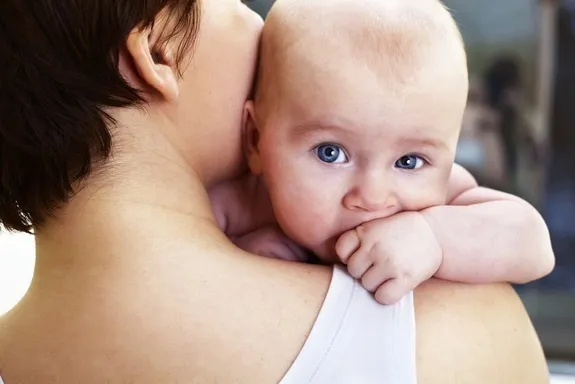
Just hours after they're born, babies seem to be able to tell the difference between sounds in their native tongue and a foreign one, according to a new study that suggests language learning begins in utero.
"The mother has first dibs on influencing the child's brain," researcher Patricia Kuhl, of the University of Washington, said in the statement. "The vowel sounds in her speech are the loudest units and the fetus locks onto them."
Researchers examined 40 babies (an even mix of girls and boys) in Tacoma, Wash., and Stockholm, Sweden. At about 30 hours old, the infants in the study listened to vowel sounds in their native language and in foreign languages. The babies' interest in the sounds was measured by how long they sucked on a pacifier wired to a computer.
The study found that, in both countries, the infants listening to unfamiliar sounds sucked on the pacifier for longer than they did when exposed to their native tongue, suggesting they could differentiate between the two. Lead author of the study, Christine Moon, a professor of psychology at Pacific Lutheran University in Tacoma, said the results show that fetuses can learn prenatally about the particular speech sounds of a mother's language.
"This study moves the measurable result of experience with speech sounds from six months of age to before birth," Moon said.
Previous studies have indicated that babies begin to develop sound-recognition skills while still in the womb. For example, in a 2011 study detailed in the journal PLoS ONE, a group of women were asked to play a brief recording of a descending piano melody in the last three weeks of their pregnancy. When the babies heard the song again a month after birth, researchers found that the infants' hearts slowed significantly compared with when they heard an unfamiliar song. In other experiments described in the journal Current Biology in 2009, scientists recorded and analyzed the cries of 60 healthy newborns when they were 3 days to 5 days old — 30 born into French-speaking families, 30 into German-speaking ones. Their analysis revealed clear differences in the melodies of their cries based on their native tongue.
The new research, which will be detailed in an upcoming issue of the journal Acta Paediatrica, could shed light on previously unknown ways that newborns soak up information.
Get the world’s most fascinating discoveries delivered straight to your inbox.
"We want to know what magic they put to work in early childhood that adults cannot," Kuhl said. "We can't waste that early curiosity."
Follow LiveScience on Twitter @livescience. We're also on Facebook & Google+.
