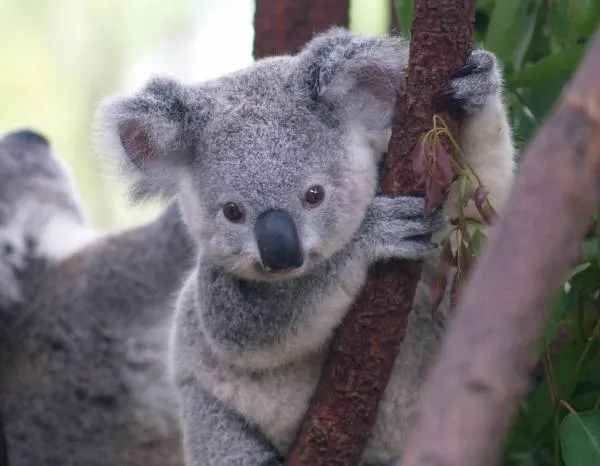
Many koalas get a retrovirus, known as KoRV, that brings on an AIDS-like immune deficiency, making them susceptible to diseases, such as leukemia. New research shows that this virus has been a problem for koalas for longer than previously thought.
Scientists looked at DNA from 28 koala skins from European and North American museums dating from the late 19th century to the 1980s. They were able to sequence mitochondrial DNA from 18 of the koalas and were surprised to find that only three of the samples were not positive for KoRV. What's more, the sequences of KoRV were nearly the same in both the old and new samples, suggesting the virus was already widespread 120 years ago.
"We expected that KoRV would be less widespread the farther back in time we went and that we would detect many changes in KoRV as it adapted from being an infectious virus to being part of the koala germ line," study researcher Alex Greenwood of the Leibniz Institute for Zoo and Wildlife Research in Berlin said in a statement.
Latest Videos From
Retroviruses — the best known example of which might be HIV — are RNA viruses that have the ability to incorporate their genetic material into their host's genome. And when retroviruses invade the host's germ line, the disease gets passed down to offspring.
"The process by which a retrovirus invades the host germ line appears to be quite drawn out in this case, so that the koala population has suffered the strongly pathological effects of the virus for many generations," another researcher Alfred Roca of the University of Illinois said in a statement.
The prevalence of KoRV is high in northern Australia and there are far fewer cases in the south. The 15 koala skins that tested positive for KoRV in the study were all from the north. This suggests that KoRV was well established in northern Australia in the late 1800s and then spread very slowly, possibly because koalas are sedentary, the researchers said.
The findings were published in the journal Molecular Biology and Evolution.
Follow LiveScience on Twitter @livescience. We're also on Facebook & Google+.

 Live Science Plus