













What Causes Bioluminescence?

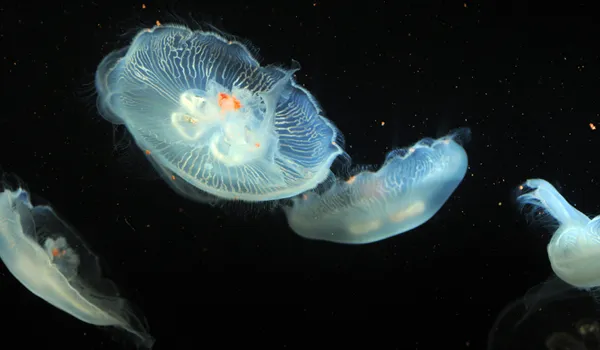
Wouldn't it be cool to have a flashlight at your fingertips whenever you need one? No more fumbling for your car keys in the dark, or trying to navigate over uneven terrain at dusk.
Though humans can't create our own light, some animals do, in a process called bioluminescence. Fireflies are perhaps the best known example, though many other species are bioluminescent, including glow worms, anglerfish, and octopus. Even some plants, such as mushrooms and other fungi, are bioluminescent.
What allows some plants and animals to create their own light? It's all about energy. Most people know that chemical energy can be released as heat that's how the food we eat gets transformed into body heat. In bioluminescent organisms, that chemical energy can also be released in the form of light.
Bioluminescent organisms can glow in complete darkness. They contain a unique compound called luciferin, according to scientists who study bioluminescence at the University of California at Santa Barbara. When luciferin is exposed to oxygen, a chemical reaction (aided along by an enzyme called luciferase) emits light.
Bioluminescence is different from fluorescence. Fluorescent organisms, such as butterflies that have fluorescent markings on their wings, would not glow in complete darkness. Fluorescent pigments only glow in the presence of an external light source, according to the UCSB scientists.
For humans, that ability to glow in the dark might be fun, but body heat may be a bit more practical.
Got a question? Email it to Life's Little Mysteries and we'll try to answer it. Due to the volume of questions, we unfortunately can't reply individually, but we will publish answers to the most intriguing questions, so check back soon.
Get the world’s most fascinating discoveries delivered straight to your inbox.
