













The Best Science Photos of the Week - Feb. 18, 2012

Ocean Swirl

From a wobbegong shark devouring a bamboo shark and the tiniest chameleon to an odd aurora and a weird microwave haze spotted in the Milky Way, this week was full of compelling science images. Take a look.
Shark-Eats-Shark
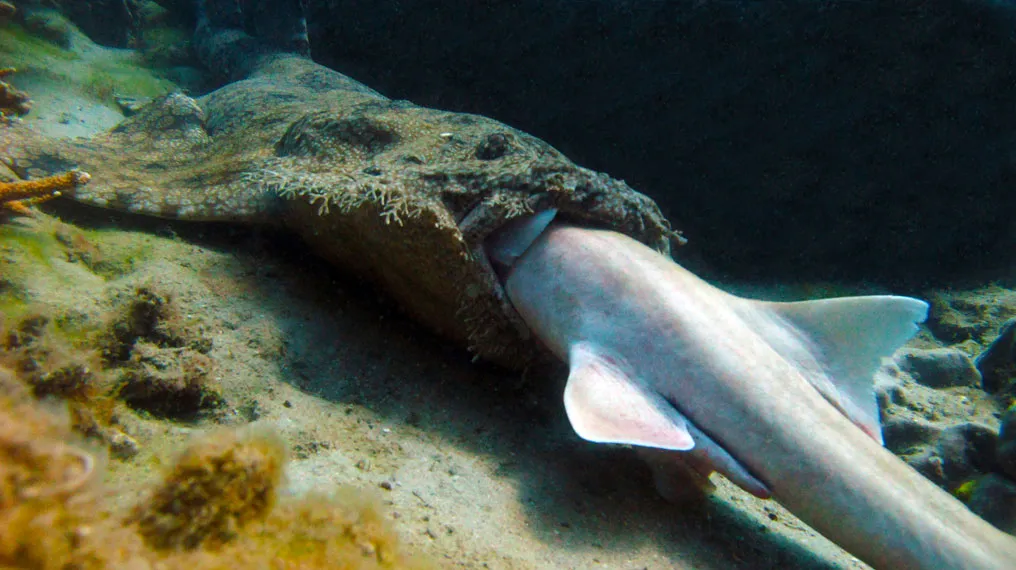
The photo (released this week) says it all: an alien-looking shark, adorned with mossy hairs and a flat face, with its mouth agape and a slender bamboo shark headfirst inside. Though not unusual for a shark to snack on another shark, it's not typical behavior — and it's certainly not common for humans to catch the action firsthand.[Read full story]
Awww, Scruffy Pups Get Checkup

A litter of four fuzzy little maned wolf pups born at a conservation center in Virginia have gotten their first checkup, revealing the adorable animals' sex for the first time. Can you guess?[Read full story]
Stonehenge Sound

Theories about the purpose of Stonehenge range from a secular calendar to a place of spiritual worship. Now, an archaeologist suggests that the Stonehenge monument in southern England may have been an attempt to mimic a sound-based illusion.[Read full story]
A Martian Heart

For Valentine's Day this week, we decided to honor Mars; though the god of war, his namesake planet is all about love — at least topographically.
In 1999, the Mars Global Surveyor snapped this photograph of a "Valentine" from the Red Planet. The "heart" is actually a pit formed by a collapse within a graben, which is a geological term for a straight-walled trough which forms along fault lines. The heart-shaped pit is 1.4 miles (2.3 kilometers) across at its widest point, and sits on the slopes of the Alba Patera volcano.[See more amazing science images]
Tiniest Chameleon Discovered

A species of chameleon small enough to easily perch on a match head has been discovered on a tiny island off Madagascar, a group of scientists announced this week.[Read full story]
The Man Who Can Fly

Dean Potter, the star of the National Geographic Channel's new show, "The Man Who Can Fly," is not only a world-famous wingsuit pilot, but he's one of the world's most renowned rock climbers.
LiveScience sister site OurAmazingPlanet aught up with Potter over the phone to get the scoop on his first flight, how being a climber and flier is a terrifying combination, and what keeps him hooked on heights.[Read the Q&A]
Get the world’s most fascinating discoveries delivered straight to your inbox.
Trove of Discoveries in Egypt

A wealth of new discoveries, from animal mummies linked to the jackal god and human remains to an enigmatic statue, are revealing the secrets of an ancient holy place in Egypt once known as the "Terrace of the Great God."
Shown here, a yellow wooden mask that would have been part of a female coffin, possibly those of chantresses. [Read full story]
Weird Microwave Haze Spotted
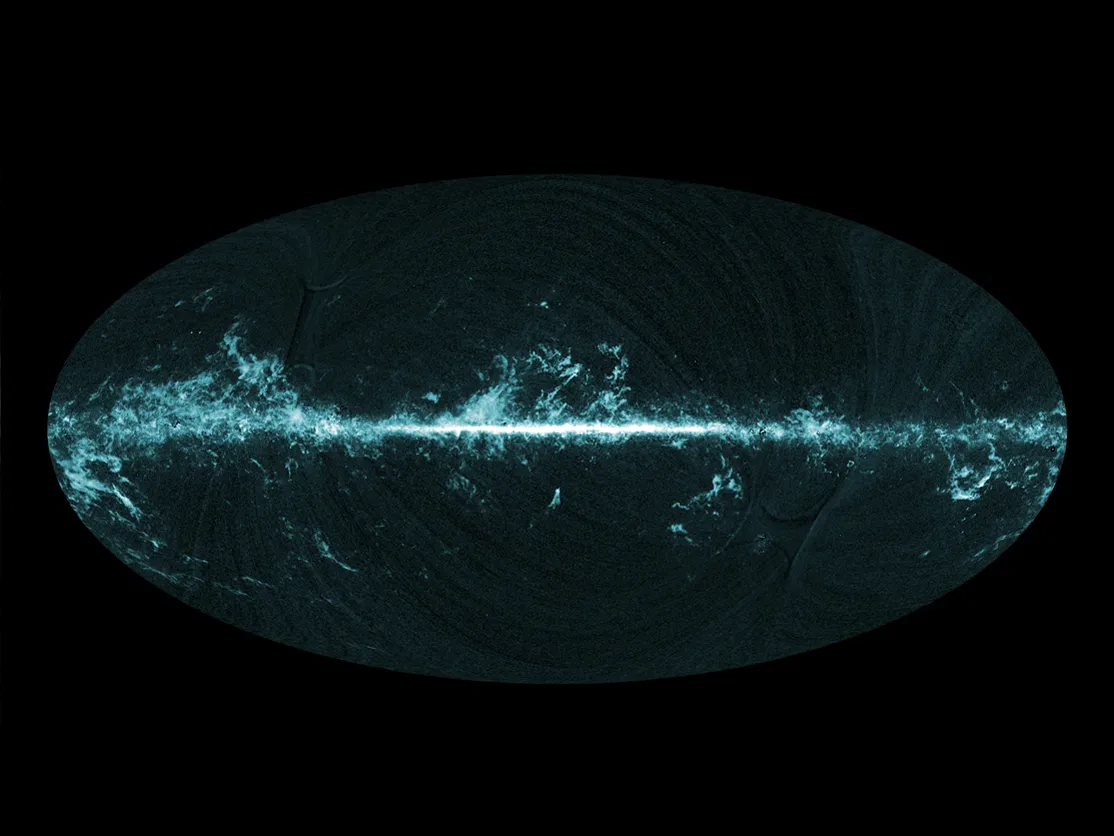
A European spacecraft has snapped new images of our Milky Way galaxy, confirming the puzzling presence of a shroud of microwave fog around the galactic core.
Shown here, this all-sky image (released Feb. 13, 2012) shows the distribution of carbon monoxide (CO), a molecule used by astronomers to trace molecular clouds across the sky, as seen by Planck. [Read full story]
Aurora Oddity

For reasons scientists can't yet explain, the northern lights blazed up in a dazzling display this week, despite the apparent lack of a major solar flare typically associated with these celestial light shows.
Shown here, the aurora borealis above Yellowknife, NWT taken at 02:12 MST on Feb. 14, 2012.[Read full story]
Baaaa! Goats Pick Up Accents

Goats don't have their own language, but they do seem able to pick up accents from one another, scientists found in a study of calls made by young goats.[Read full story]
