













For Lightning-Fast Drones, Add a Bird's Intuition

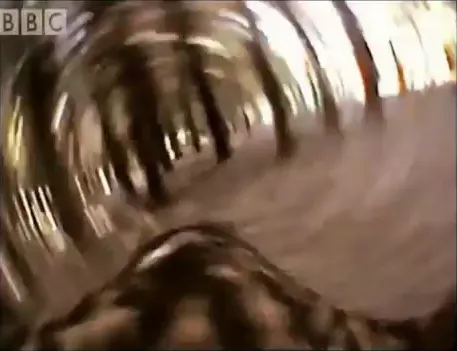
How are you able to move through a dense forest or crowd, maximizing your speed while avoiding a collision? Intuition — something not easily computer-programmed.
Lacking this trait, robots cannot navigate obstacle-riddled environments nearly as fast as living things can, nor as fast as roboticists or the military would like. As it stands, the simplest way to maximize the speed of unmanned aerial vehicles (UAVs), or drones, is to have them go as fast as possible while still being able to stop within the length of their field of view. For example, if their sensors can detect obstacles up to 100 meters ahead, then they must be capable of decelerating to zero within 100 meters.
But living things can do much better. For this reason, roboticists and aeronautics engineers at the Massachusetts Institute of Technology have teamed up with biologists at Harvard University to model the behavior of one of nature's best forest flyers, a bird called the northern goshawk. With the reflexes of a spring trap, this raptor zips through forests at breakneck speeds, continuously adjusting its flight path to avoid collisions with trees and, through superior flight skills, catching the birds and small mammals on which it preys.
The team has calculated the theoretical speed limit the goshawk must observe in any given environment to avoid a crash. They hope this will enable them to engineer birdlike UAVs that can streak through forests and urban canyons at much faster speeds than they're currently capable of.
Emilio Frazzoli, an associate professor of aeronautics and astronautics at MIT who is involved in the new research, said the northern goshawk does not set its speed based on what it can immediately see. Rather, the bird gauges the density of trees in its vicinity to intuit how fast it can fly, given that forest density, such that it will always be able to find an opening through the trees. [How Birds Navigate]
Humans do the same when downhill skiing, Frazzoli pointed out. "When you go skiing off the path, you don’t ski in a way that you can always stop before the first tree you see. You ski and you see an opening, and then you trust that once you go there, you'll be able to see another opening and keep going," he said in a press release.
To determine the relationship between the goshawk's flightspeed and the density of the surrounding forest, the researchers created a mathematical equation to represent the bird's position and speed. They then worked out a model of the statistical distribution of trees in a forest, allowing the size, shape and spacing of individual trees to vary while keeping the overall density the same.
Get the world’s most fascinating discoveries delivered straight to your inbox.
Using this model, Frazzoli and his colleagues were able to calculate the probability that a bird would collide with a tree while flying at various speeds. The team found that, for any given forest density, there exists a critical speed above which the bird is sure to eventually crash. Below that speed, the bird has an "infinite collision-free trajectory" — it could, in theory, fly without incident forever.
To see if the theoretical speed limits they calculated actually bear out in nature, the MIT engineers are collaborating with biologists at Harvard, who are observing birds as they fly through cluttered environments. So far, preliminary comparisons between theory and experiment in the case of pigeons are "very encouraging," Frazzoli said.
If confirmed in other birds, the same algorithm could be used to program flying robots to improve their maneuverability, Frazzoli said. Given some general information about the density of obstacles in a given environment, an unmanned aerial drone could automatically determine the maximum speed below which it can safely fly.
The results up to this point will be detailed in a paper at the IEEE Conference on Robotics and Automation. Next, the researchers plan to see how close humans can come to the theoretical speed limits. Frazzoli and his colleagues are developing a first-person flying game to test how well people can navigate through a simulated forest at high speeds.
"What we want to do is have people play, and we'll just collect statistics," Frazzoli said. "And the question is, how close to the theoretical limit can we get?"
Follow Natalie Wolchover on Twitter @nattyover. Follow Life's Little Mysteries on Twitter @llmysteries, then join us on Facebook.

Natalie Wolchover was a staff writer for Live Science from 2010 to 2012 and is currently a senior physics writer and editor for Quanta Magazine. She holds a bachelor's degree in physics from Tufts University and has studied physics at the University of California, Berkeley. Along with the staff of Quanta, Wolchover won the 2022 Pulitzer Prize for explanatory writing for her work on the building of the James Webb Space Telescope. Her work has also appeared in the The Best American Science and Nature Writing and The Best Writing on Mathematics, Nature, The New Yorker and Popular Science. She was the 2016 winner of the Evert Clark/Seth Payne Award, an annual prize for young science journalists, as well as the winner of the 2017 Science Communication Award for the American Institute of Physics.