














Expedition to Reveal Sunken Civil War Ships' Secrets

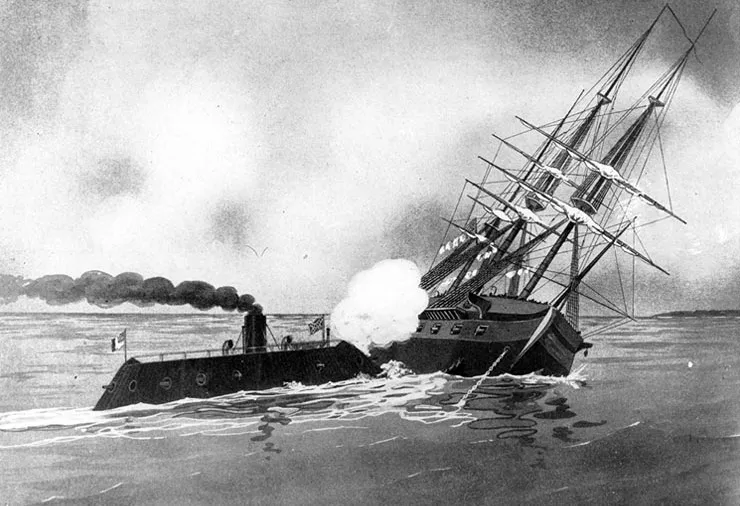
Nearly 150 years after they sank to the bottom of a river in Virginia, two Civil War shipwrecks are getting some modern-day scrutiny.
A mapping expedition set off this week to examine the shipwrecks in hopes of assessing their condition and producing detailed images of the sunken Civil War vessels — one Union and one Confederate — that may shed light on the technology used in America's bloodiest conflict.
Using state-of-the-art sonar technology to acquire data, researchers with the U.S. Navy and the National Oceanic and Atmospheric Administration (NOAA) will create 3-D maps of the two shipwrecks, the USS Cumberland and CSS Florida.
"We are extremely excited about this project," said Alexis Catsambis, underwater archaeologist and cultural resource manager of the U.S. Navy’s Naval History & Heritage Command (NHHC), in a statement. "The information collected during this project will really increase our understanding of the condition of these wrecks."
The USS Cumberland was lost on March 8, 1862, during the Battle of Hampton Roads, where it served in the U.S. Navy's North Atlantic Blockading Squadron. The ship sank after being rammed by the Confederate ironclad CSS Virginia (formerly USS Merrimack) and went down with more than 121 men.
That next day, revenge arrived in the form of the USS Monitor, a Union ironclad, which fought a fierce battle with the CSS Virginia. Although the fight was a draw, it marked a major turning point in the war, and boosted morale in the North.
The CSS Florida was a Confederate commerce raider that had been captured by the U.S. Navy in Brazil. The vessel was being towed back to the United States, but was lost en route, when it collided with a U.S. Navy troop ferry.
Get the world’s most fascinating discoveries delivered straight to your inbox.
Both shipwrecks are protected by federal law.
The project will take place aboard a NOAA research vessel from the nearby USS Monitor National Marine Sanctuary, which was designated to protect the cultural heritage of its namesake, the shipwrecked Monitor, which was lost in a storm in 1862.
Artifacts from the USS Cumberland and CSS Florida, including gun and cannon parts, glassware and a belt buckle are on permanent exhibit at the Hampton Roads Naval Museum in Norfolk, Va.
"The survey work on the USS Cumberland and the CSS Florida will not only improve our understanding of the vessels themselves, but it will help us gather information on the Civil War and the technological innovations of the time and allow us to bring those stories to the public in a way we have not been able to in the past," said Rear Admiral Jay DeLoach, NHHC director, in a statement.
