


-
 'Bonobo genius' Kanzi, who could understand English and play Minecraft, dies at 44
The bonobo Kanzi, who learned to make stone tools, play Minecraft and communicate at the level of a 2-year-old human, has died.
primates -
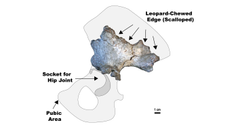 Smallest human relative ever found may have been devoured by a leopard 2 million years ago
The left hip and leg bones from a young female Paranthropus robustus discovered in South Africa show she was extremely short — and ended up as a leopard's lunch.
archaeology -
 'Mystery population' of human ancestors gave us 20% of our genes and may have boosted our brain function
A novel genetic model suggests that the ancestors of modern humans came from two distinct populations that split and reconnected during our evolutionary history.
10 Commentshuman-evolution -
 'The most shameful form of execution': Han warriors found dismembered in 2,100-year-old mass grave in Mongolia
Genetic analysis of skeletons in a mass grave in Mongolia has revealed they were soldiers in the Han-Xiongnu Wars more than two millennia ago.
ancient-china -
 Human ancestors arrived in Western Europe much earlier than previously thought, fossil face fragments reveal
Fragments of the left side of the skull of a human relative have been discovered in Spain, revealing the face of the oldest human ancestor ever discovered in Western Europe.
archaeology -
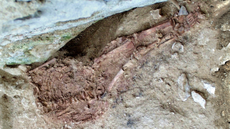 28,000-year-old Neanderthal-and-human 'Lapedo child' lived tens of thousands of years after our closest relatives went extinct
Researchers used a novel method of radiocarbon dating to figure out the age of the Lapedo child, who had both Neanderthal and human traits.
2 Commentsneanderthals -
 1.5 million-year-old bone tools crafted by human ancestors in Tanzania are oldest of their kind
The discovery of 1.5 million-year-old bone tools upends what we know about tool manufacturing in East Africa.
human-evolution -
 1,500-year-old skeleton found in chains in Jerusalem was a female 'extreme ascetic'
Archaeologists were surprised that the skeleton of a person wrapped in heavy chains was female.
archaeology -
 Neanderthal 'population bottleneck' around 110,000 years ago may have contributed to their extinction
A study of the inner ear bones of Neanderthals shows a significant loss of diversity in their shape around 110,000 years ago, suggesting a genetic bottleneck that contributed to Neanderthals' decline.
3 Commentsneanderthals


