













NASA details plan to build a levitating robot train on the moon
NASA's plan to build a train track on the moon is part of the agency's Innovative Advanced Concepts program, which aims to develop "science fiction-like" projects for future space exploration.

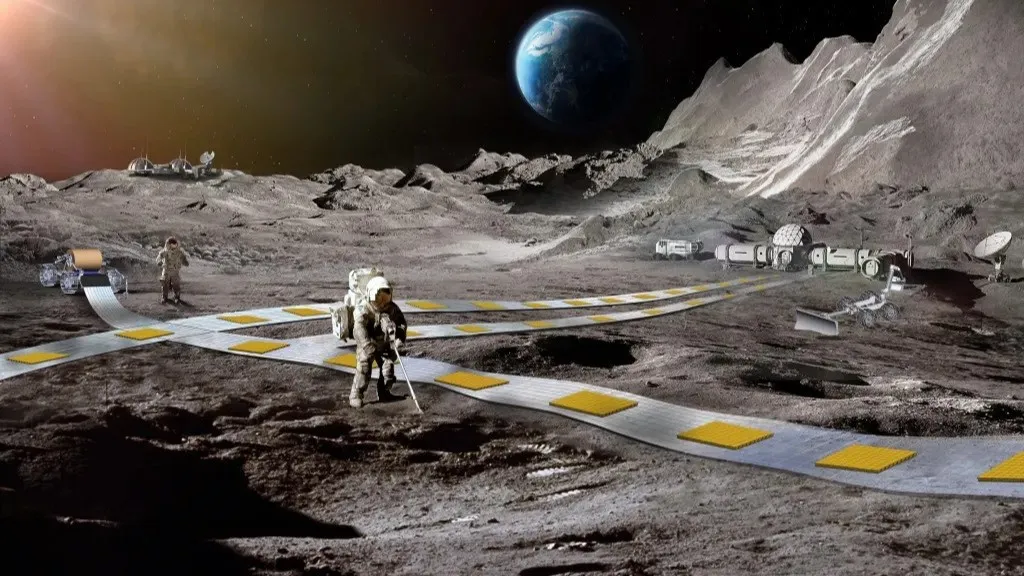
Does a levitating robot train on the moon sound far-fetched? NASA doesn’t seem to think so, as the agency has just greenlit further funding for a study looking into the concept.
The project, called "Flexible Levitation on a Track" (FLOAT), has been moved to phase two of NASA's Innovative Advanced Concepts program (NIAC) , which aims to develop "science fiction-like" projects for future space exploration.
The FLOAT project could result in materials being transported across the moon's surface as soon as the 2030s, according to the agency.
"We want to build the first lunar railway system, which will provide reliable, autonomous, and efficient payload transport on the Moon," project leader Ethan Schaler, a robotics engineer at NASA's Jet Propulsion Laboratory, wrote in a NASA blog post. "A durable, long-life robotic transport system will be critical to the daily operations of a sustainable lunar base in the 2030s."
RELATED STORIES
According to NASA's initial design, FLOAT will consist of magnetic robots levitating over a three-layer film track to reduce abrasion from dust on the lunar surface. Carts will be mounted on these robots and will move at roughly 1 mph (1.61 km/h). They could transport roughly 100 tons (90 metric tons) of material a day to and from NASA's future lunar base.
NASA plans to send astronauts back to the moon as early as 2026 as part of the agency's Artemis mission, and aims to eventually set up a permanent lunar base to aid future space exploration.
Get the world’s most fascinating discoveries delivered straight to your inbox.
Other "science fiction-like" NIAC plans that have advanced to the next development phase include fluid-based telescopes and a rocket propelled by plasma.

Ben Turner is a U.K. based writer and editor at Live Science. He covers physics and astronomy, tech and climate change. He graduated from University College London with a degree in particle physics before training as a journalist. When he's not writing, Ben enjoys reading literature, playing the guitar and embarrassing himself with chess.