













A Skyscraper-Size Asteroid Will Zoom Past Earth Saturday Night
The space rock is as big as several football stadiums but poses virtually no threat.

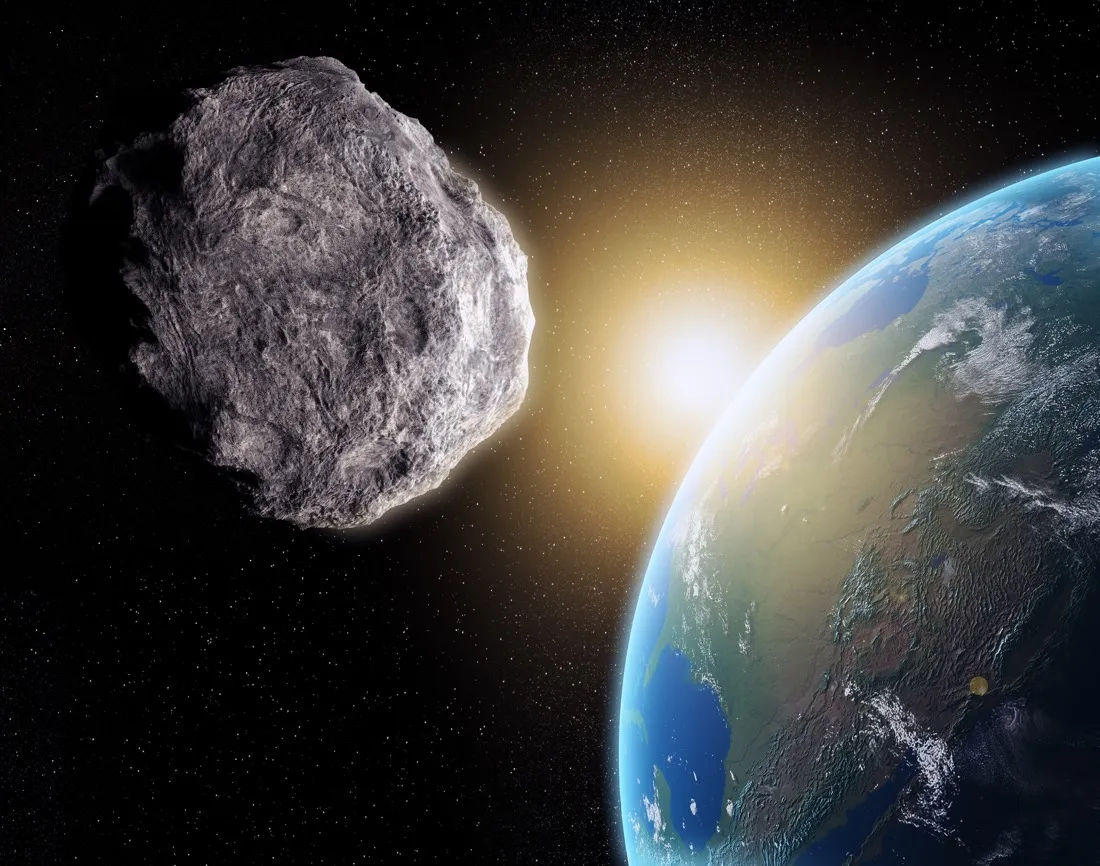
An asteroid as wide as a skyscraper is tall will glide harmlessly past Earth tomorrow night (Sept. 14).
Asteroid 2000 QW7 is between 1,000 and 2,000 feet wide (300 to 600 meters) and will fly by at a distance of 3 million miles (5 million kilometers) from our planet at 7:54 p.m. EDT, according to NASA's Jet Propulsion Laboratory. The asteroid, moving 14,361 mph (23,100 km/h), poses no danger to Earth on this pass. If an asteroid were to seriously endanger you, you likely wouldn't hear about it until the space rock was about to drop on your head.
Related: When Space Attacks: The 6 Craziest Meteor Impacts
That's because NASA keeps an eye on space rocks large enough to endanger Earth, and the agency closely tracks those it knows about. NASA has known about this particular rock since 2000, and astronomers knew well in advance of this flyby that it posed no danger. The agency will also closely track the rock on this pass so that astronomers can better plot the asteroid's future movements and figure out whether it may come closer to us on future passes.
As Live Science previously reported, the asteroid orbits the sun just like the Earth does, and will next drift near Earth on Oct. 19, 2038.
- 9 Ideas About Black Holes That Will Blow Your Mind
- The 12 Strangest Objects in the Universe
- The Biggest Unsolved Mysteries in Physics
Originally published on Live Science.
Get the world’s most fascinating discoveries delivered straight to your inbox.
