















Monster black hole may have killed this galaxy's star-forming power, James Webb Telescope reveals
New James Webb Space Telescope observations reveal that the galaxy GS-9209 had its star-forming power abruptly "quenched" by mysterious forces after millions of years of productivity.

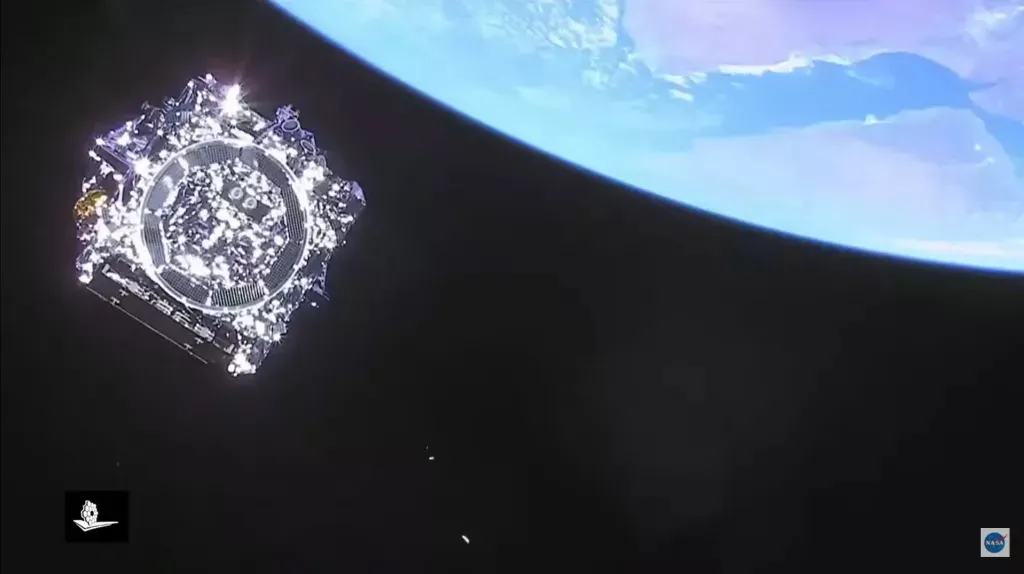
The James Webb Space Telescope has spotted the earliest known galaxy to ever be "quenched" — suddenly and mysteriously halting its star formation — and scientists think the supermassive black hole in its center could be to blame.
The galaxy, called GS-9209, formed most of its stars during a hyperactive burst of activity between 600 million and 800 million years after the Big Bang. Then, more than 12.5 billion years ago, it suddenly stopped. The researchers published the discovery Jan. 26 on the preprint server arXiv, so it has yet to be peer-reviewed.
"The thing that's particularly surprising about this is how soon after the Big Bang this galaxy has shut down its star formation. In the local universe, most massive galaxies have shut down in what we think is a slow process over billions of years," lead author Adam Carnall, an astrophysicist at the Royal Observatory in Edinburgh, Scotland, told Live Science. "When you go back to early times, there's not enough time for a slow quenching process to happen, because it's not that old. For a long time it was thought that we wouldn't find these sorts of things."
Related: James Webb Telescope spots galaxies from the dawn of time that are so massive they 'shouldn't exist'
Light travels at a fixed speed through the vacuum of space, so the deeper scientists look into the universe, the further back in time they see.
Scientists first spotted GS-9209 in the early 2000s. In the last five years, astronomers have used ground-based telescopes to study the galaxy’s various wavelengths of emitted light , flagging it as a galaxy that had potentially been quenched. But the infrared wavelengths needed to gauge the galaxy's distance are dampened by Earth's atmosphere, so scientists needed a very powerful space telescope to study its age.
Enter the James Webb Space Telescope (JWST). The $10 billion space observatory was designed to read the earliest chapters of the universe's history in its faintest glimmers of light — picked up by the telescope’s infrared sensors — after being stretched out from billions of years of travel across the expanding fabric of space-time. Studying GS-9209 with the JWST revealed that the distant galaxy roared into life 600 million years after the Big Bang with an enormous burst of star formation. Over a cosmically brief 200 million years, the galaxy served up enough piping-hot stars to match the present-day Milky Way's 40 billion solar masses’ worth. Then, 800 million years after the Big Bang, the ancient galaxy abruptly went quiet.
Get the world’s most fascinating discoveries delivered straight to your inbox.
The frenzy of star formation was a result of the rapid collapse of the giant gas cloud that became the galaxy and the turbulent conditions of the early universe, the researchers said. These factors combined to cause the stars to ignite at a much faster rate, and at a higher efficiency, than in the present-day universe.
RELATED STORIES
"Typically, the galaxies we see today have had access to about five times as much gas or more than they formed stars. This result and some others are beginning to point now to that ratio being a bit higher in the early universe," Carnall said. "The emerging picture is that at the highest redshifts [the furthest back in time] galaxies are capable of forming more of the available gas into stars."
Following this burst of activity, the researchers think GS-9209 was abruptly shut down by a supermassive black hole lurking at its heart. These black holes are born from the collapse of giant stars and grow by ceaselessly gorging on gas, dust, stars and other black holes. The black hole at GS-9209's center likely grew large enough to become a quasar. Quasars are giant black holes with an enormous quantity of material circling their maws, which heats up enough to push gas clouds away with blasts of light up to a trillion times more luminous than the brightest stars.
"If you have a massive black hole and stuff is falling into it, that leads to a lot of energy radiating out from that accretion," Carnall said. "This is basically the only process that we think is capable of injecting enough energy into the galaxy's gas over a short space of time to either heat it up such that it doesn't collapse to form anymore stars, or to completely clear the galaxy out of star-forming gas."
Now that they've made their initial observations of GS-9209, the researchers plan to study the galaxy in more detail with the European Southern Observatory's Extremely Large Telescope (ELT) — which is scheduled to make its first observations in 2028.

Ben Turner is the features editor at Live Science. He covers physics and astronomy, among other topics such as tech and climate change. He graduated from University College London with a degree in particle physics before training as a journalist. When he's not writing, Ben enjoys reading literature, playing the guitar and losing at chess.