

-
 Why did the Roman Empire split in two?
The vast Roman Empire split into the Eastern Roman Empire and Western Roman Empire in the fourth century A.D.
romans -
 Which animals could go extinct by 2050?
With climate change, habitat loss, overhunting and more, which animals are at risk of extinction by 2050?
animals -
 Can cats really see in the dark?
How do cats navigate around rooms in the dark?
cats -
 Could Earth ever leave our solar system?
Here's how the Earth could theoretically leave the solar system.
planet-earth -
 Why are there no bridges over the Amazon River?
Due to a number of technical and logistical difficulties, as well as meandering through sparsely populated areas, there is no pressing need to build a bridge on the Amazon River.
rivers-oceans -
 How can you experience weightlessness?
How one earth (or space) can a person experience microgravity?
space -
 Where are most of Earth's volcanoes?
There are about 1,350 potentially active volcanoes on Earth. Where are most of these volcanoes located?
volcanoes -
 Who invented chess?
When and where was chess invented and why is it still so popular around the world?
human-behavior -
 Francium: Facts about the elusive radioactive element
Properties and sources of the element francium.
chemistry -
 What is the world's largest city?
Here's a look at the world's largest cities by size, population and cultural impact.
planet-earth -
 Why are human lips red?
Did you know that the outline or the border of your lips is a special feature of humans only?
health -
 Can you learn to wiggle your ears?
Here's what the science says about whether everyone or only those with the right genes can wiggle their ears.
health -
 What are air pockets?
What are air pockets and can they cause planes to crash?
planet-earth -
 How long does it take to make petrified wood?
Here's the science behind petrified wood, including what it is, how long it takes to form and whether it's useful in the research world.
planet-earth -
 Why do seashells sound like the ocean?
A seashell held to your ear may sound like the ocean, but so does cupping your hand or holding a bowl at the same spot. Here's why.
rivers-oceans -
 Why is tobacco so addictive?
Here's what happens in people's brains when they use tobacco products.
health -
 What human-made structures can be seen from space?
Can anything crafted by humans be viewed with the naked eye from space, or would astronauts need to use binoculars?
space -
 What is Paris syndrome?
Some people who visit Paris develop extreme symptoms — such as nausea, vomiting and hallucinations — when their expectations of the city do not jibe with reality.
human-behavior -
 Why do people believe in conspiracy theories?
Even when there is substantial evidence to the contrary, the allure of conspiracy theories may be too powerful for some to resist.
conspiracies-paranormal -
 Do bees really die if they sting you?
Here's the science behind whether all bees die after stinging humans.
insects -
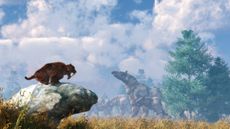 Did cats really disappear from North America for 7 million years?
Here's the science behind the so-called "cat gap," a roughly 7 million-long period in North America in which there aren't any known cat fossils.
cats -
 Why haven't we cloned a human yet?
Here's a look at the science for why we haven't cloned any humans yet.
human-behavior -
 Why haven't we cloned a human yet?
Here's a look at the science for why we haven't cloned any humans yet.
-
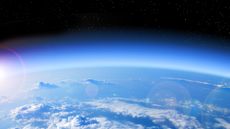 Where does Earth end and outer space begin?
The atmosphere is vast and parts of it extend beyond the moon. But where does it technically end, according to scientists?
geology


