Human remains discovered in a cave in Poland have revealed that ancient European groups cannibalized the dead in an act of war. A new analysis of cut marks and fractures on the bones suggest people removed the ears and scooped out the brains of their vanquished enemies shortly after they died.
In a study published Thursday (Feb. 6) in the journal Scientific Reports, researchers detailed the evidence of cannibalism they found on 53 bones from Maszycka Cave, an archaeological site near Krakow, Poland. The bones were dated to 18,000 years ago, during the Magdalenian period of European prehistory, and came from at least 10 people: six adults and four children.
Using advanced 3D microscopy techniques, the researchers identified cut marks and fractures on 68% of the bones and were able to rule out carnivorous animals and accidental trampling as causes for the injuries.
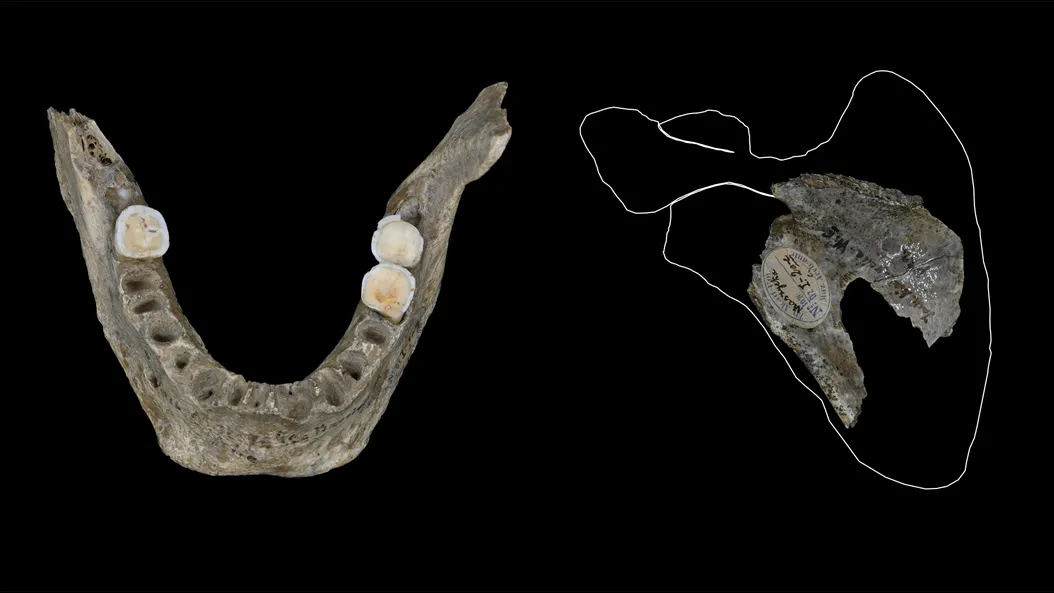
Looking at two dozen skull fragments, the researchers identified cuts made from scalping, defleshing, and removing the ears and jaw. Additionally, fractures along the cranial sutures suggested that people were breaking corpses' skulls specifically to remove the brains. Further evidence of butchering could be seen on shoulder, arm and leg bones.
"The location and frequency of the cut marks and the intentional fracturing of the skeleton clearly show nutritional exploitation of the bodies," study lead author Francesc Marginedas, a doctoral student at the Catalan Institute of Human Paleoecology and Social Evolution (IPHES), said in a translated statement.
(Image credit: Institut Català de Paleoecologia Humana i Evolució Social)
The high percentage of bones that had been manipulated after death strongly suggests cannibalistic behavior, the researchers wrote in the study, as people prepared and extracted the edible parts of the bones. Additionally, the pattern of cut marks and fracturing suggested that people prioritized the removal of the most nutritious and calorie-dense parts of corpses — including their brains, bone marrow and muscles — shortly after the individuals died.
Sign up for the Live Science daily newsletter now
Get the world’s most fascinating discoveries delivered straight to your inbox.
But the reason for the cannibalistic behavior is unclear. "In prehistoric contexts, it could be in response to survival needs or to ritual practices, or even to the dynamics of intergroup violence," study co-author Palmira Saladié, a researcher at IPHES, said in the statement.
However, archaeological evidence from Maszycka Cave suggests this incidence of cannibalism was not related to survival needs. During the Magdalenian period (23,000 to 11,000 years ago) in Europe, the area was characterized by an increase in human populations, the researchers wrote in the study. Therefore, they said, famine is an unlikely explanation for eating other humans.
Because there is no evidence that the cannibalized people had been buried in a respectful way and the human remains are mixed in with butchered animal bones, the researchers think this is an example of "warfare cannibalism." A combination of too many people and too few resources in the Magdalenian period could have led to territorial tensions and violent struggles to survive.
For the Maszycka Cave skeletons, "the age profile resembles that of a complete nuclear family unit, suggesting that they could have been attacked, subdued and subsequently cannibalized," the researchers wrote.
Other European sites dating to the same time period also have evidence of cannibalism, which suggests the practice was an important part of the culture in the Magdalenian period, whether they were consuming their own dead or their enemies.
Kristina Killgrove is a staff writer at Live Science with a focus on archaeology and paleoanthropology news. Her articles have also appeared in venues such as Forbes, Smithsonian, and Mental Floss. Kristina holds a Ph.D. in biological anthropology and an M.A. in classical archaeology from the University of North Carolina, as well as a B.A. in Latin from the University of Virginia, and she was formerly a university professor and researcher. She has received awards from the Society for American Archaeology and the American Anthropological Association for her science writing.
You must confirm your public display name before commenting
Please logout and then login again, you will then be prompted to enter your display name.