 Live Science Plus





Europe's genetic legacy
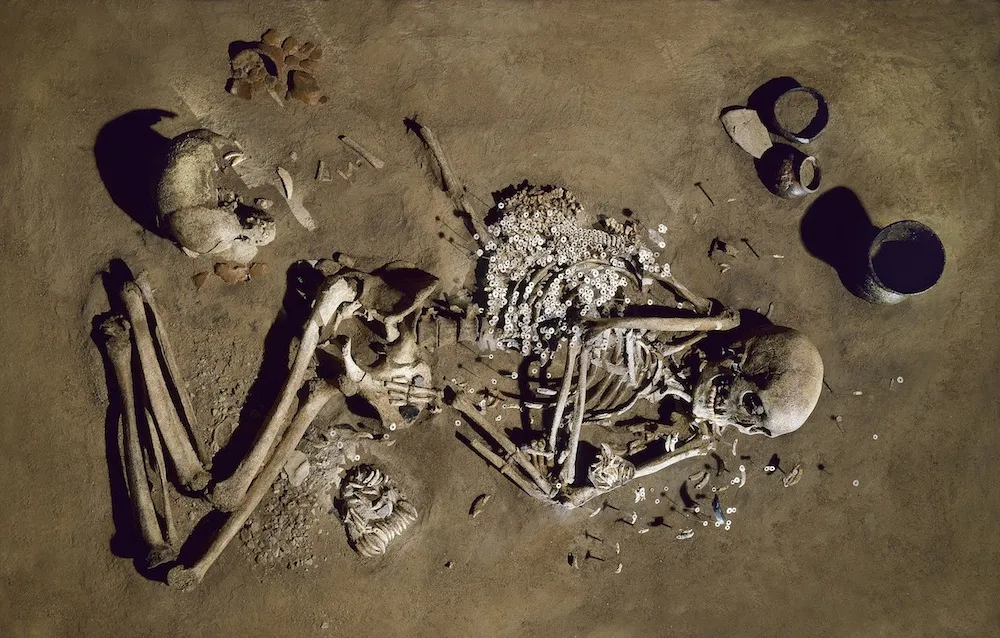
Two studies published in the October 2013 issue of Science have shed new light on Europe's ancient genetic legacy. One analyzed mitochondrial DNA from 364 fossil skeletons from individuals (like the one shown here) across the Saxony-Anhalt region of Germany and found that the modern genetic makeup of Europe was mostly set by 3,500 years ago.
Dominant farmers

The study found that once farmers entered the region from the Middle East, about 7,500 years ago, they were dominant for 2,500 years. It's not clear whether the original hunter gatherers in the Saxony-Anhalt region vanished, or simply moved to isolated areas and left no archaeological trace. Either way, they didn't leave much in the genetic legacy of Europe. Here a burial of a Bell Beaker Culture individual in a stone encasement, found in the Saxony -Anhalt region of Germany.
Parallel cultures

A second study analyzed DNA from a cave in Hagen, Germany and found that hunter gatherers and immigrant farmers from the Middle East coexisted for 2,000 years in Europe without having sex.
Article continues belowNarrow cave

The Blätterhöhle cave was first discovered in 2004. Excavating in the long, narrow cave could be tricky, but archaeologists eventually uncovered more than 450 skeletal fragments from at least 29 individuals, spanning from nearly 10,000 years ago until about 5,000 years ago.
Isolated cultures

Analysis of the mitochondrial DNA, or DNA that is passed on from the mother, revealed that during the Neolithic period, freshwater fishermen and farmers coexisted in parallel cultures.
Burying the dead

The two cultures buried their dead in the same spot, so they must have had some contact. Yet there was little sex between the two groups, the study found.
Delicate process

Extracting useable DNA from such ancient specimens requires special precautions to prevent cross-contamination. Here, researchers photograph the fossil skeletons.

