Get the world’s most fascinating discoveries delivered straight to your inbox.
You are now subscribed
Your newsletter sign-up was successful
Want to add more newsletters?
Delivered Daily
Daily Newsletter
Sign up for the latest discoveries, groundbreaking research and fascinating breakthroughs that impact you and the wider world direct to your inbox.
Once a week
Life's Little Mysteries
Feed your curiosity with an exclusive mystery every week, solved with science and delivered direct to your inbox before it's seen anywhere else.
Once a week
How It Works
Sign up to our free science & technology newsletter for your weekly fix of fascinating articles, quick quizzes, amazing images, and more
Delivered daily
Space.com Newsletter
Breaking space news, the latest updates on rocket launches, skywatching events and more!
Once a month
Watch This Space
Sign up to our monthly entertainment newsletter to keep up with all our coverage of the latest sci-fi and space movies, tv shows, games and books.
Once a week
Night Sky This Week
Discover this week's must-see night sky events, moon phases, and stunning astrophotos. Sign up for our skywatching newsletter and explore the universe with us!
Join the club
Get full access to premium articles, exclusive features and a growing list of member rewards.
Barren field
In 2007, archaeologist Christopher Morehart was using satellite imagery to map the irrigation canals and waterways surrounding the ancient city of Teotihuacan, in Mexico. There, he discovered a pile of skulls that may represent one of the largest human sacrifice sites in Mesoamerica. [Read the full story on the human sacrifices discovered in Mexico]
Drained lake
The researchers began investigating a region about 15 miles from the ancient city that had once housed a vast lake called Lake Xaltocan. [Read the full story on the human sacrifices discovered in Mexico]
Looted site
The team noticed evidence of looting and began excavating. When they dug further, they found a shocking discovery. [Read the full story on the human sacrifices discovered in Mexico]
Shocking discovery
The site contained dozens of skulls lined up, all severed at the first or second vertebrae. [Read the full story on the human sacrifices discovered in Mexico]
Pile of skulls
The site also contained a shrine with several artifacts associated with agricultural culture. [Read the full story on the human sacrifices discovered in Mexico]
Mass death
The combination of artifacts and human remains led the researchers to conclude that a mass human sacrifice occurred at the site. [Read the full story on the human sacrifices discovered in Mexico]
Ancient incense
Carbon dating of the skulls and a nearby incense burner led the team to conclude the skulls date to between 600 to 850 A.D., around the time of Teotihuacan's fall.
Get the world’s most fascinating discoveries delivered straight to your inbox.
Many victims
So far, the team has excavated over 150 skulls. (The researchers chose not display the skulls because the sacrificed people may have historic ties to people of today's indigenous cultures.) [Read the full story on the human sacrifices discovered in Mexico]
Water god
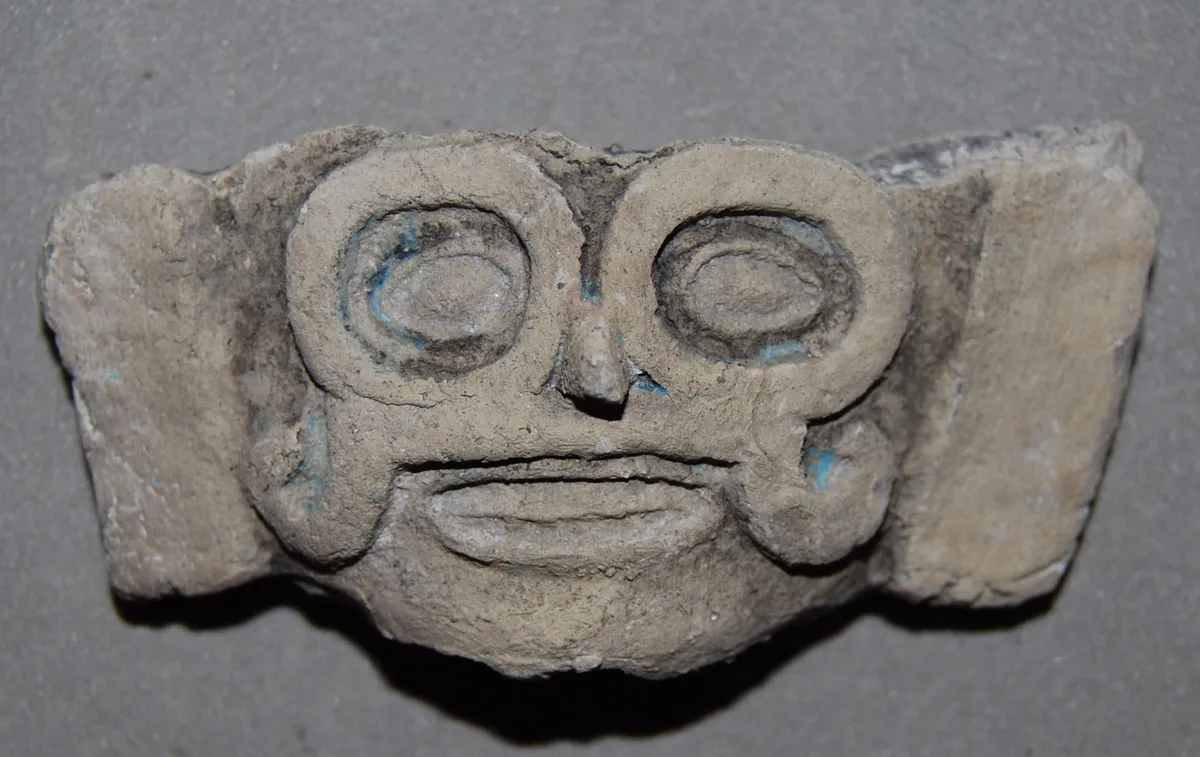
An artifact depicting Tlaloc, an ancient water god from the Pre-Columbian period in Mexico, was found at the human sacrifice site at Lake Xaltocan. [Read the full story on the human sacrifices discovered in Mexico]
Rural culture
Because of its rural locale, the sacrifice event is markedly different from others in the region, which typically took place in the great pyramids of large cities. [Read the full story on the human sacrifices discovered in Mexico]
Chaotic time
The sacrifice likely occurred during a time of great upheaval, when the Teotihuacan culture was declining. [Read the full story on the human sacrifices discovered in Mexico]

Tia is the editor-in-chief (premium) and was formerly managing editor and senior writer for Live Science. Her work has appeared in Scientific American, Wired.com, Science News and other outlets. She holds a master's degree in bioengineering from the University of Washington, a graduate certificate in science writing from UC Santa Cruz and a bachelor's degree in mechanical engineering from the University of Texas at Austin. Tia was part of a team at the Milwaukee Journal Sentinel that published the Empty Cradles series on preterm births, which won multiple awards, including the 2012 Casey Medal for Meritorious Journalism.
