













Mars Rover Detects Primordial Signs of Life Under the Red Planet's Surface

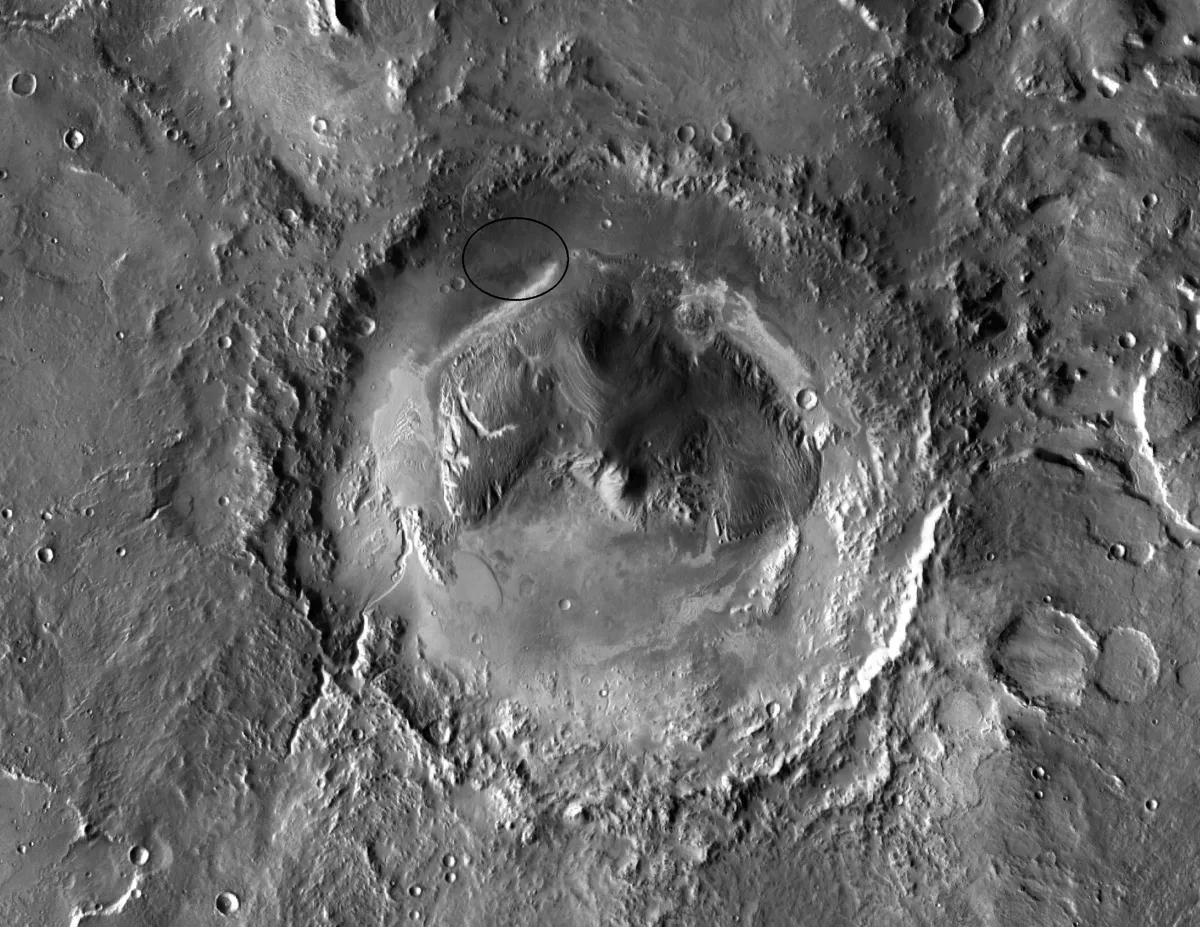
The Mars rover Curiosity has uncovered a potential sign of life on the Red Planet — the planet's highest-ever measurement of a natural gas called methane.
On Earth, methane primarily comes from microbes, who breathe out the gas. It's possible that life-forms hiding under Mars' crust are also responsible for this latest measurement, according to NASA. But don't get too excited — yet. Life isn't the only potential explanation for the finding. Methane is also created by chemical reactions between rocks and water, according to NASA. [9 Strange, Scientific Excuses for Why Humans Haven't Found Aliens Yet]
"With our current measurements, we have no way of telling if the methane source is biology or geology," principal investigator Paul Mahaffy of NASA's Goddard Spaceflight Center in Greenbelt, Maryland, said in a statement.
Plus, even this record-high methane measurement pales in comparison with average methane levels on Earth. Curiosity measured methane concentrations of 21 parts per billion (ppb) on Mars. In comparison, Earth's methane concentrations are close to 1,860 ppb.
Curiosity has detected methane in the past, albeit at much lower concentrations. The average level on Mars is close to 7 ppm. But methane levels do appear to rise and fall seasonally, according to NASA. And this pattern offers a potential clue about the source of the methane. During the Martian winter, concentrations fall. In the summer, they rise once more. Scientists know that beneath the Red Planet's crust lies a layer of ice. Perhaps, in summer, ice thaws, releasing trapped bubbles of methane into the atmosphere (similar to the way Earth's arctic permafrost releases methane into the atmosphere as it melts). These methane pockets could be a relic of ancient life, according to NASA.
Methane isn't the only evidence that Mars was once hospitable to ancient life. In 2012, Curiosity identified chemical traces of 3 billion-year-old water in a Martian streambed. The following year, scientists identified some of the chemical building blocks of life in a rock sample collected by Curiosity near that same site.
The European Space Agency's Trace Gas Orbiter has been in orbit around Mars for over a year and has yet to measure any methane. By partnering with the Trace Gas Orbiter team, NASA scientists hope to eventually solve the Mars methane mystery and find the source of the natural gas.
Get the world’s most fascinating discoveries delivered straight to your inbox.
- Interstellar Space Travel: 7 Futuristic Spacecraft to Explore the ...
- Sending Humans to Mars: 8 Steps to Red Planet Colonization
- 10 Interesting Places in the Solar System We'd Like to Visit
Originally published on Live Science.

Isobel Whitcomb is a contributing writer for Live Science who covers the environment, animals and health. Her work has appeared in the New York Times, Fatherly, Atlas Obscura, Hakai Magazine and Scholastic's Science World Magazine. Isobel's roots are in science. She studied biology at Scripps College in Claremont, California, while working in two different labs and completing a fellowship at Crater Lake National Park. She completed her master's degree in journalism at NYU's Science, Health, and Environmental Reporting Program. She currently lives in Portland, Oregon.