













Nobel Prize in Medicine Awarded to Scientists Who Developed Breakthrough Cancer Treatment
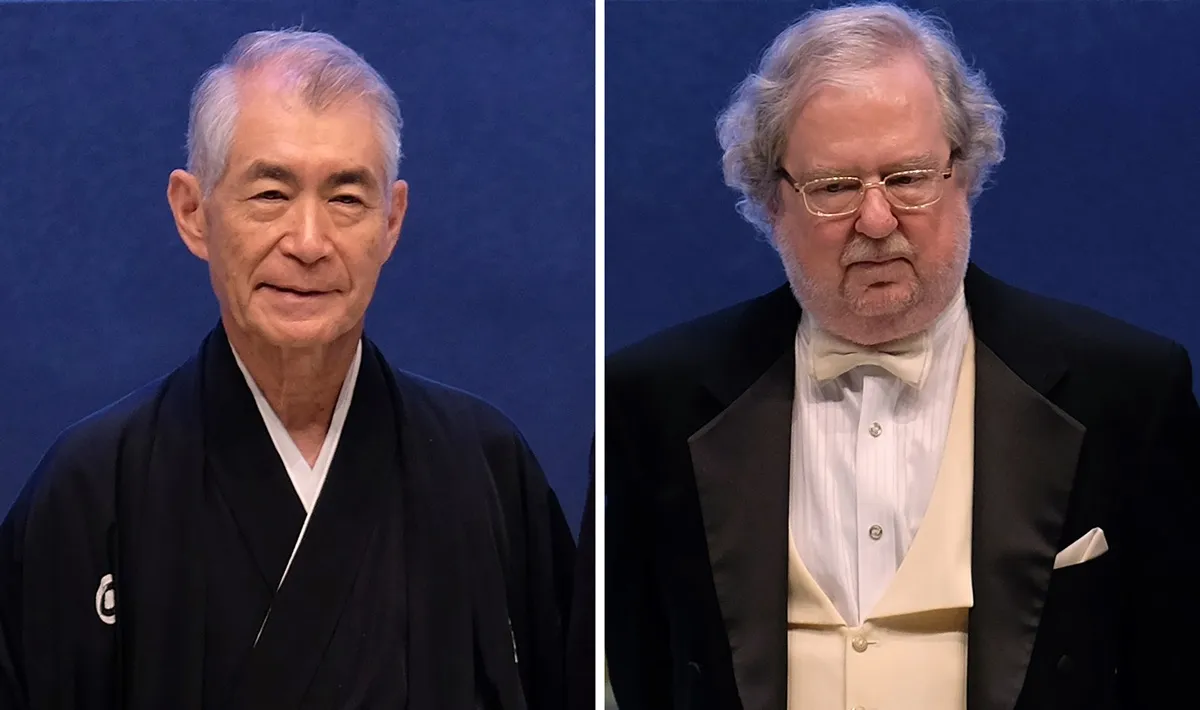
James P. Allison and Tasuku Honjo have been awarded the Nobel Prize in chemistry for their discovery of a type of cancer treatment that harnesses a person's own immune system, the Nobel Assembly at Karolinska Institutet announced this morning (Oct. 1).
"By stimulating the inherent ability of our immune system to attack tumor cells this year’s Nobel Laureates have established an entirely new principle for cancer therapy," the Nobel Prize Foundation said in a statement.
Allison, who is a professor at the University of Texas MD Anderson Cancer Center, Houston, was studying a protein called CTLA-4 that inhibits a person's immune system by putting the brakes on the actions of T cells. He realized that if he could release that "brake," the immune system would wreak havoc on tumors. Allison developed this idea into a new type of cancer treatment.
Meanwhile, Honjo, who is now a professor at Kyoto University in Japan, discovered a similar immune system-braking protein. Called PD-1, this protein, he found, functions as a T-cell brake but via a different mechanism than CTLA-4 uses. Honjo's research led to the clinical development of treating cancer patients by targeting that protein.
Whereas both proteins have proven to be effective targets for treating different types of cancer, PD-1 has shown stronger results for the so-called immune checkpoint therapy, according to the Nobel Prize Foundation. Targeting PD-1 has shown positive results in treating lung cancer, renal cancer, lymphoma and melanoma. And more recently, scientists have found that combining the two targets can be even more effective in cancer treatment, particularly in combating melanoma.
Honjo and Allison will split the Nobel prize amount of 9 million in Swedish krona, or $1.01 million.
Originally published on Live Science.
Get the world’s most fascinating discoveries delivered straight to your inbox.
Jeanna Bryner is managing editor of Scientific American. Previously she was editor in chief of Live Science and, prior to that, an editor at Scholastic's Science World magazine. Bryner has an English degree from Salisbury University, a master's degree in biogeochemistry and environmental sciences from the University of Maryland and a graduate science journalism degree from New York University. She has worked as a biologist in Florida, where she monitored wetlands and did field surveys for endangered species, including the gorgeous Florida Scrub Jay. She also received an ocean sciences journalism fellowship from the Woods Hole Oceanographic Institution. She is a firm believer that science is for everyone and that just about everything can be viewed through the lens of science.