














The Arctic's Most Stable, Solid Patch of Ice Is Melting

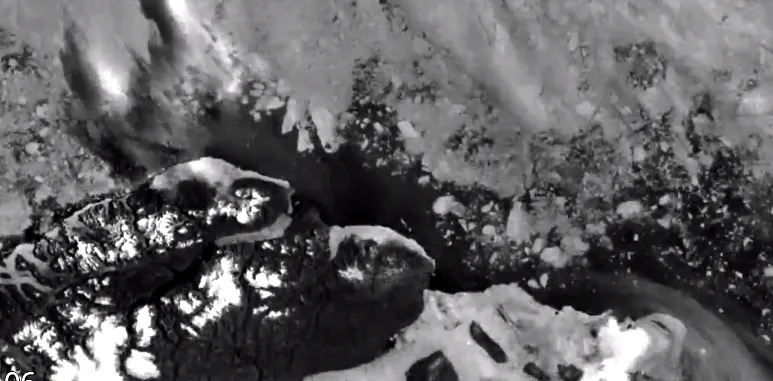
A chunk of hard ice north of Greenland has disappeared.
It should be there; it's been there for longer than any other ice in the Arctic. It's never gone missing before in all the years that humans have been tracking it. Indeed, according to The Guardian, scientists used to refer to it as "the last ice area," thinking it would hold out at the edge of Greenland even as the warming planet melted all the ice around it. But now, according to satellite images, a big piece of that Greenland coastal ice suddenly vanished or was reduced to floating bits and slush.
The reason that this ice is — or was — so reliable is because it's so thick.
"The ice there has nowhere else to go, so it piles up," Walt Meier, a senior research scientist at the U.S. National Snow and Ice Data Center, told The Guardian. "On average, it's over 4 meters [13 feet] thick and can be piled up into ridges 20 m [65 feet] thick or more. This thick, compacted ice is generally not easily moved around. However, that was not the case this past winter (in February and March) and now. The ice is being pushed away from the coast by the winds."
As Live Science reported at the time, February 2018 was a bizarrely warm winter month in the Arctic, with the region at one point climbing above freezing for 24 hours during a time when local waters usually pack on a thick crust of ice that can last throughout the year. The result? A "new normal" of collapsing sea ice in the summer.
As Yale's School of Forestry and Environmental Studies explained, that melting has ripple effects across the planet. Methane, a greenhouse gas, trapped in permafrostescapes into the atmosphere. The landlocked Greenland ice sheet melts into the ocean, raising sea levels. And the planet loses white surface area, which reflects heatback into space — so the pace of global climate change accelerates.
Originally published on Live Science.
Get the world’s most fascinating discoveries delivered straight to your inbox.
