













Why This Optical Illusion Arrow Always Points Right

Arguably everything posted on Instagram is a distortion of reality (especially if you're a celebrity), but a video shared this week by the science account Physicsfun truly tests the laws of optics.
The video shows a simple plastic toy in the shape of an arrow, pointing right. When a hand rotates the arrow 180 degrees so that the tip should be facing left, something peculiar happens: The arrow still, somehow, appears to be pointing right. In fact, no matter how many times the arrow spins, it always points right. What's the deal?
There's no magic or postproduction trickery at play; this devilish little arrow is actually a crafty optical illusion designed by mathematician and professional brain-bender Kokichi Sugihara.
Sugihara is a professor at Meiji University in Tokyo and an award-winning illusion artist. He has placed four times at the Neural Correlate Society's Best Illusion of The Year contest and won twice, typically for his geometrically complex, 3D-printed illusory objects, like the arrow above.
Sugihara first unleashed this maddening arrow in a 2016 paper published in the journal Symmetry. In the paper, Sugihara proposed a new type of optical illusion known as "anomalous mirror symmetry" — essentially, an object that appears to break the rules of typical mirror symmetry by pointing in one direction in reality, and in the opposite direction in reflection.
"When we see the object and its mirror image … what we perceive does not necessarily obey this physical law [of mirror symmetry], because what we perceive is the result of image processing in our brains," Sugihara wrote in the paper. "Hence optical illusion arises."
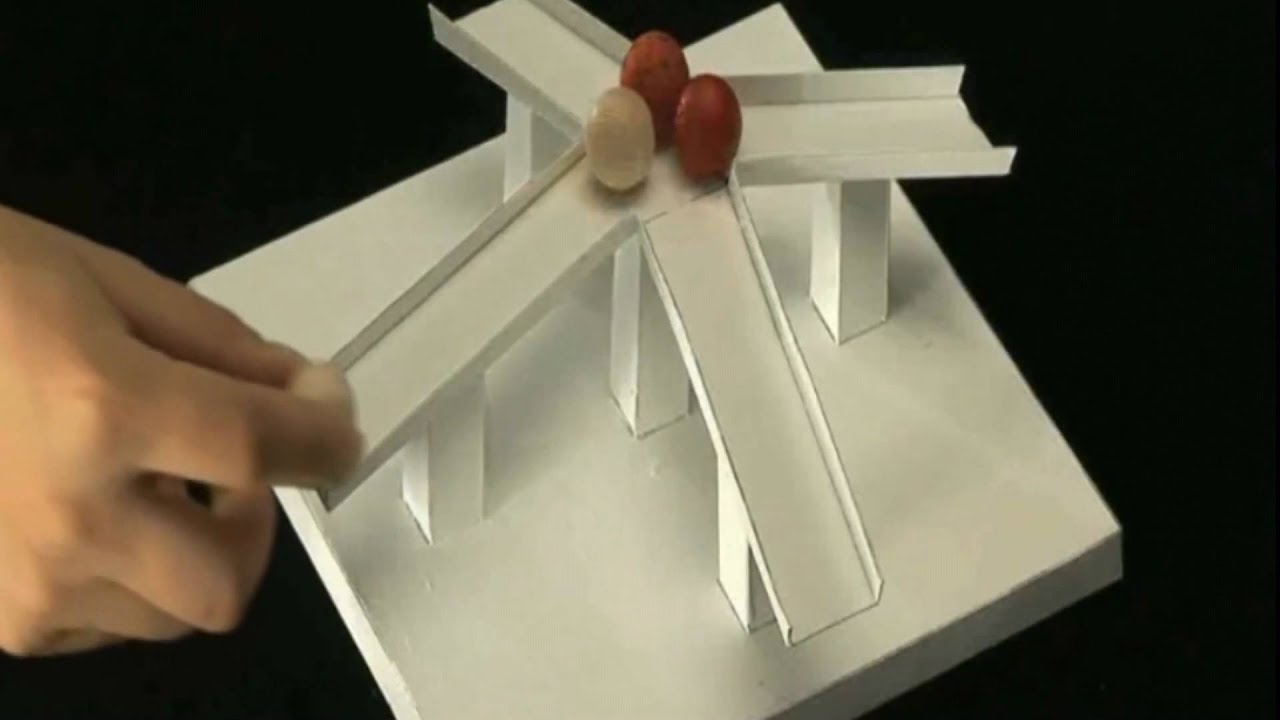
The mathematician provides some complex equations in his paper explaining how such an illusion is possible, but all you really need to know is that the always-right arrow uses forced perspective to exploit your brain's penchant for finding right angles where there aren't any.
Get the world’s most fascinating discoveries delivered straight to your inbox.
Pause the Instagram video at the 16-second mark, and you'll see that the arrow isn't really an arrow at all, but rather more of an oval pinched into two points at the middle and filled with barely perceptible interior curves. When viewed at a certain angle and under certain lighting conditions, these curves trick your brain into reading curves as angles — even when the object is rotated 180 degrees.
This always-right arrow is an example of what Sugihara calls an "ambiguous cylinder illusion," which turns your brain's craving for order against itself. Because ambiguous cylinders are designed to be neither perfectly circular nor perfectly angular, your brain can actually see them as both simultaneously, as demonstrated in Sugihara's video below.
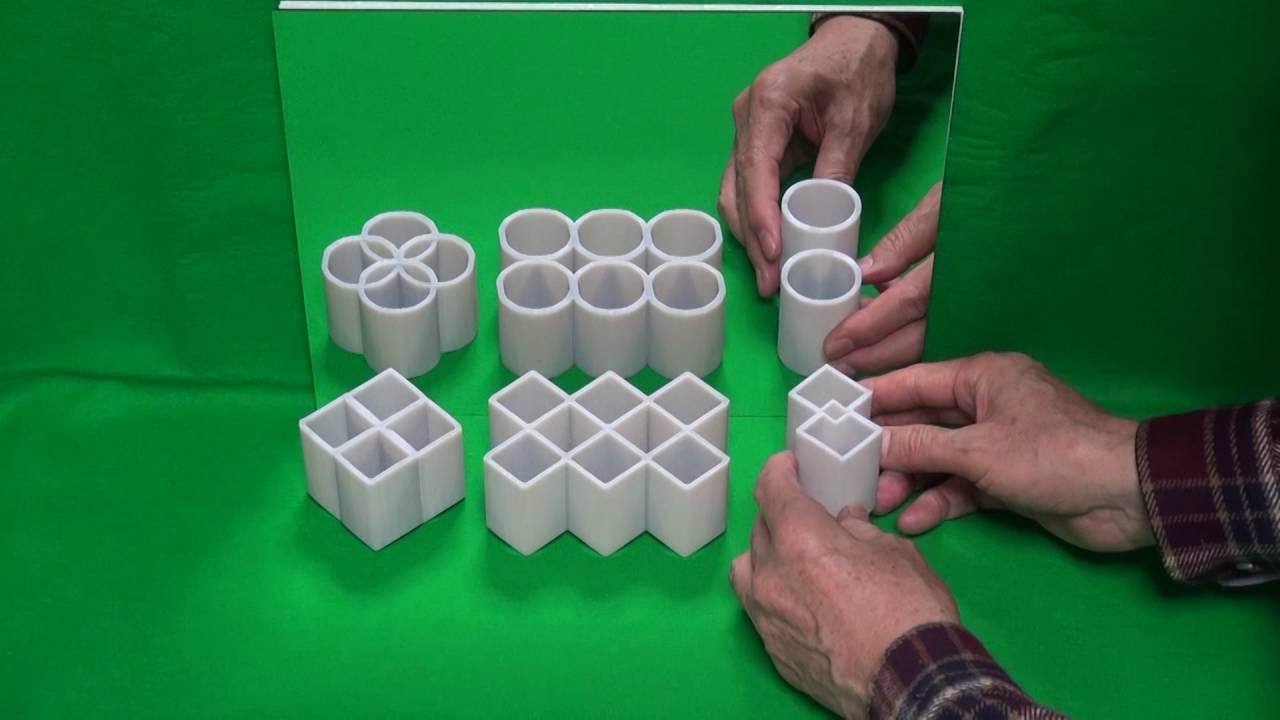
It may seem like magic, but it's really just your brain being too efficient in its quest to make order out of chaos. For an even weirder demonstration of this, sit back, relax and watch an entire field of color disappear before your eyes.
Originally published on Live Science.

Brandon is the space / physics editor at Live Science. With more than 20 years of editorial experience, his writing has appeared in The Washington Post, Reader's Digest, CBS.com, the Richard Dawkins Foundation website and other outlets. He holds a bachelor's degree in creative writing from the University of Arizona, with minors in journalism and media arts. His interests include black holes, asteroids and comets, and the search for extraterrestrial life.